


Lesson MINI

Britannica School logo in navy blue and green text

LESSON MINI

Celebrating Black Leadership and Civil Rights

Grade:

6-8

Topic:

Black History Month

Unit:

Black History
Eye icon in white on red background

Overview

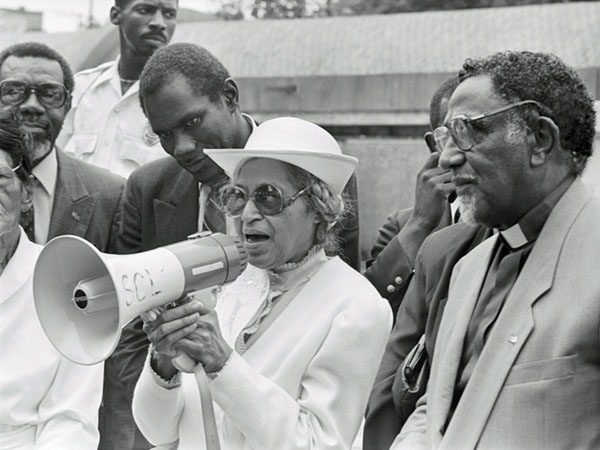
Black and white photo of woman speaking through megaphone at rally.
© Bettmann /Getty Images

In this lesson mini, students explore the contributions of influential Black leaders who shaped American history through their courage, creativity, and unwavering commitment to justice. Through reading primary and secondary sources, analyzing speeches and music, and engaging in collaborative projects, students investigate how figures such as Frederick Douglass, Duke Ellington, Rosa Parks, Fannie Lou Hamer, and Martin Luther King, Jr., challenged injustice and advanced civil rights. Students examine the strategies these leaders used to advocate for freedom, equality, and democratic participation. Through inquiry-based discussions and authentic learning experiences, students connect past struggles for justice to present-day civic responsibilities and reflect on how individuals can contribute to positive social change in their own communities.

Ideas for Implementation
Social Studies
Literacy
Library media
Learning centers
Intervention or enrichment
Key Vocabulary & Definitions
abolitionist (noun): a person who worked to abolish, or end, the institution of slavery and the Atlantic slave trade that supported it
advocate (noun): a person who argues for, recommends, or supports a cause or policy
amendment (noun): a change or an addition to a law or an official document, such as the U.S. Constitution
civil rights (noun): the rights of all people to be treated equally under the law, including rights such as voting, equal access to education, and freedom from discrimination
civil rights movement (noun): a mass protest movement against racial segregation and discrimination in the southern United States
discrimination (noun): the unfair treatment of people because they belong to a particular group
empathy (noun): the ability to put yourself in somebody else’s shoes
enslaved (adjective): describing people who have no freedom or who are forced to work for no pay and who can be bought, sold, or separated from family
plantation (noun): a very large farm that historically used enslaved laborers
segregation (noun): the forced separation of some people within a society from others based on race, religion, or other characteristics
Authentic Learning Extensions
Authentic learning opportunities for studying Black history involve real-world experiences and practical applications that help students understand civil rights, justice, and equality concepts meaningfully. Here are some examples:
Community Oral History Project: Invite students to conduct interviews with Black American community members, family members, or neighbors about their experiences, family histories, and perspectives on civil rights and social change. Students can record, transcribe, and share these stories with permission, creating a living archive of local Black history and connecting historical events to present-day experiences.
Jazz Exploration: Invite students to listen to jazz music and investigate how this genre of music represents the Black American experience and cultural heritage. Guide students to research the historical context of jazz, its origins, key musicians, and its role in American culture. Encourage students to listen to live jazz music, if possible. Consider also exploring other genres with Black American roots, such as blues, gospel, hip-hop, and R&B.
Literature and Poetry Study: Engage students in reading and analyzing works by Black American authors and poets, such as Langston Hughes, Maya Angelou, Nikki Giovanni, or contemporary writers. Guide students to explore themes of identity, resistance, joy, and resilience in Black American literature and to create their own written or spoken word responses.
Primary Source Analysis: Provide students with access to primary-source documents such as photographs, letters, newspaper articles, legal documents, and artifacts from the civil rights era. Guide students to analyze these sources critically, asking questions about perspective, purpose, and historical context.
Service Learning or Civic Action Project: Connect students with local organizations working on issues related to equality, justice, or community empowerment. Students can participate in service projects, awareness campaigns, or advocacy efforts that address contemporary challenges, helping them understand how the legacy of the civil rights movement continues today.

Choose Activity

5
Celebrating Black Leadership and Civil Rights

Activity

1 :

Frederick Douglass: Voice of Truth

By the end of the activity, students will be able to analyze how Frederick Douglass’s rhetoric exposed the evils of slavery and inspired Black people to fight for equality and freedom.

>40

Minutes

Materials

Digital devices such as Chromebooks or tablets (one per student)
School-approved collaborative writing tool
Whiteboard and display
Writing utensils

Resources

1
Tell students that during today’s activity they will learn about Frederick Douglass, a brave leader of the abolitionist movement who escaped slavery and spoke about his personal experiences to advocate for civil rights.
2
Display the Frederick Douglass image, and invite students to describe what they notice. Then ask:
What do you know about the abolitionist movement?
What are some examples of civil rights?
What have you heard about Frederick Douglass?
3
Display the Frederick Douglass article, and give each student a digital device and a Frederick Douglass Questions handout. Divide the class into pairs, preview each section of the article, and read aloud the handout questions. Address any questions or doubts, and then give students time to read the article on their devices and complete the handout.
4
After students finish, facilitate a class discussion by asking:
What did Frederick Douglass stand for?
How did he resist the status quo?
What tools did he use to speak about justice, equality, and liberty?
Ask students to share their observations about how Frederick Douglass wrote speeches, articles, and books in his efforts to fight for social reform and promote equal rights.
5
Invite students to consider why Douglass’s accomplishments were especially impressive, given that enslaved people were typically not taught to read or write. Display the Frederick Douglass: Learning to Read and Write video, and instruct students to take notes in Part 2 of the Frederick Douglass Questions handout. After the video, ask students to share what they learned. Specifically, ask, “How did Frederick Douglass use literacy for empowerment?”
6
Tell students that they will work in their same pairs to write a four-paragraph speech. They should imagine that they are Frederick Douglass, it is 1841, and they are going to present their speech at an antislavery convention. Give each student an Antislavery Speech handout, and review the provided framework.
7
Invite students to empathize with Douglass’s life experience and write messages promoting liberty and justice. To set expectations, display brief excerpts of Frederick Douglass’s 1883 speech “The Color Line in America.”
8
Guide students to write the speech together. Instruct them to use the handout to brainstorm ideas, and invite students to draw inspiration from the Frederick Douglass article and video as they write. Afterward, have students type their speeches on their digital devices using a school-approved collaborative writing tool. While students are working, circulate the room and offer support.
9
Invite students pairs to practice reading their speeches aloud and revise them as needed. After a set time, divide the class into small groups of three pairs to share their work.
10
Bring the class back together, and call on a few volunteers to share their speeches with the class.
11
To wrap up the activity, ask students to reflect on everything they learned about Frederick Douglass. As students share, record their ideas on the board.
12
Give each student a 3-2-1 Reflection exit ticket. Invite students to write three new things they learned about Frederick Douglass, identify two connections, and pose one question they still have. When students finish, invite them to share what they wrote with a nearby classmate.
Language Support: For students who benefit from additional language support, pre-teach key vocabulary and use visual aids to enhance understanding. Provide students with a Mini Glossary graphic organizer to support them in incorporating new vocabulary. Place multilingual students with supportive partners who speak their home languages. Provide a translated version of the Frederick Douglass article along with the English version before class to enhance understanding of main ideas.
Sentence Starters: Provide a scaffolded Antislavery Speech handout with additional guiding questions and sentence starters to support students in writing an effective and persuasive speech inspired by Frederick Douglass’s messages.
Primary Source Analysis: Invite students to read and analyze Frederick Douglass’s “The Color Line in America” speech. Consider providing students with a Note-Taking graphic organizer to identify the key words, key facts, and main ideas from the text. This approach exposes students to primary sources and helps them build reading comprehension skills.
Background-Building Video: At the start of the lesson, instead of showing the image of Frederick Douglass to activate students’ thinking, display the Britannica School Frederick Douglass video. Provide a set of guiding questions, and afterward invite students to share what they learned. This approach encourages students to practice their listening comprehension and build their knowledge of Frederick Douglass before the partner-reading task.
Parallel Teaching: For collaborative teaching and learning environments, this learning activity is well suited to a Parallel Teaching strategy. In this model, the class is divided into two groups, and each teacher delivers the same activity simultaneously to their group. This reduces the student-teacher ratio, allowing for more interaction and individualized attention. With smaller groups, students are more likely to participate actively and receive immediate feedback, which fosters a deeper understanding of the content and promotes a more engaging learning experience. Evidence suggests that small-group instruction leads to increased student engagement and improved academic outcomes.
Celebrating Black Leadership and Civil Rights

Activity

2:

Duke Ellington: Pioneer of Jazz

By the end of the activity, students will be able to analyze the important events of Duke Ellington’s life and his lasting contributions to jazz music.

>40

Minutes

1
Tell students that during today’s activity they will learn about Duke Ellington, one of the most important jazz musicians of the 20th century. Ask students what they know about jazz music. Invite students to share their ideas, and then explain that jazz is a genre of music that began among Black Americans in the South and gradually spread across the nation. Ask students to consider why jazz originated in Black American communities in New Orleans. After a brief discussion, share that jazz emerged as a way for musicians to express the Black experience creatively.
2
Begin the lesson by asking students what they know about the Harlem Renaissance. After students share their initial thoughts, explain that Duke Ellington was an important figure in the Harlem Renaissance, a period of time in New York City in the 1920s when writers, artists, and musicians got together to celebrate Black culture. Display and read aloud the “Introduction” section of the Harlem Renaissance article, and then ask volunteers to share what they learned.
3
Give each student a copy of the Song of the Day bell ringer. Play a jazz song of choice by Duke Ellington, such as “Caravan,” “Take the A Train,” or “It Don’t Mean a Thing.” As students listen, ask them to draw what the song is about and write how it makes them feel. Afterward, invite students to share their ideas with a nearby classmate.
4
Display the Duke Ellington image, and invite students to describe what they notice. Then display the Duke Ellington article, and preview that it will cover Ellington’s life and career trajectory.
5
Give each student a digital device and a Timeline graphic organizer. Invite students to access the Duke Ellington article and begin reading independently. Ask them to identify the events that shaped Ellington’s life and record them in chronological order on the organizer. Model an example (Edward Kennedy Ellington, also known as Duke Ellington, was born in Washington, D.C., on April 29, 1899).
6
After students finish reading the article and completing the graphic organizer, bring the class back together, and ask:
Who was Duke Ellington?
How did he learn to play music?
What awards did he win?
How does jazz represent the Black American experience?
7
Divide the class into groups of three to five students, and tell them to compare and contrast their ideas.
8
Tell students that they will use the information from the Duke Ellington article and their completed graphic organizers as a guide to create with their group one large timeline on a poster board.
9
Distribute a set of coloring and writing utensils and a poster board to each group. Give students time to complete the project, and circulate the classroom to offer support as needed.
10
As students finish their timelines, display them around the classroom, and have students complete a gallery walk to explore what other groups came up with.
11
Bring the class back together, and call on volunteers to share what they learned about Duke Ellington’s accomplishments and legacy. Ask:
How do you think artistic expression can challenge stereotypes and promote pride?
How can music be a vehicle for social commentary and empowerment?
Language Support: For students who benefit from additional language support, pre-teach key article vocabulary words (e.g., musician, composer, entertainer). Encourage students to use the listening function so that they can practice listening comprehension while they read the text. Also, instead of asking students to read independently, pair multilingual learners with bilingual peers or native English speakers for collaborative support while they read the Duke Ellington article.
Guiding Questions: Provide a set of questions along with the article to enhance reading comprehension and support students in completing the Timeline graphic organizer independently. This approach supports students in breaking down important information presented in the text.
Jazz Reading: Challenge students to further explore jazz music by reading the Britannica School Jazz article and taking note of the main ideas. Encourage students to choose a jazz musician from the text and write a brief biography. This approach encourages students to develop their independent research and reading skills.
Digital Poster: Instead of having students create analog timelines, invite them to work in small groups to create and present a digital poster that represents Ellington’s life. Encourage students to use song quotes, famous photographs, important facts, and clip art to engage their audience. This approach fosters teamwork and aids students in building technology skills.
One Teaching, One Assisting: For collaborative teaching and learning environments, this learning activity is well suited to a One Teaching, One Assisting strategy. In this model, one teacher leads the activity while the other circulates, assisting individual students as needed. This ensures that when students encounter difficulties, they receive immediate help in the form of personalized support and answers to their questions. By addressing students’ unique needs and keeping them on track, this approach enhances individual learning experiences and fosters a supportive classroom environment. Studies indicate that immediate feedback and individualized attention can significantly enhance student understanding and retention of material.
Activity Introduction: The lead teacher begins by introducing Duke Ellington’s jazz music and instructing students to draw and write about how a particular song makes them feel. The assisting teacher ensures students stay on task.
Independent Reading Task: The assisting teacher distributes digital devices and a Timeline graphic organizer and instructs students to find the Duke Ellington article. The lead teacher displays the article and graphic organizer and explains the task. When students have completed their work, the lead teacher facilitates a discussion about the reading.
Collaborative Timelines: The lead teacher divides students into groups and distributes the necessary materials, and the assisting teacher explains the collaborative timeline task. As students work, both teachers circulate the room and offer feedback and individualized attention to groups.
Activity Wrap-Up: The lead teacher closes the activity by asking students to share what they learned about Duke Ellington’s musical contributions. The assisting teacher offers support as needed.
Celebrating Black Leadership and Civil Rights

Activity

3:

Rosa Parks: Courage and Leadership in the Civil Rights Movement

By the end of the activity, students will be able to describe why Rosa Parks is widely recognized as a civil rights movement leader and symbol of nonviolent resistance and courage.

>40

Minutes

1
Tell students that during today’s activity they will learn about Rosa Parks, a civil rights activist whose refusal to give up a bus seat to a white man in Montgomery, Alabama, led to the historic Supreme Court decision to end segregation on buses.
2
Begin the lesson by sharing with students the Rosa Parks image and asking them to share what they observe. Then ask:
What questions does the image raise for you?
If someone were asked to give up their seat based on their appearance, what might that experience be like?
What actions did Rosa Parks take on the bus that day?
How might people view Rosa Parks’s actions differently? What makes someone a symbol of courage and nonviolent protest?
3
Give each student a K-W-L graphic organizer, and ask them to write down everything they know about Rosa Parks in the K column. Afterward, instruct students to share what they wrote in the K column with a nearby classmate. As students finish, bring the class back together, and call on volunteers to share what they discussed with their partner.
4
Guide students to write what they would like to know about Rosa Parks in the W column, working with the same partner. Afterward, call on volunteers to share their ideas, and then as a class brainstorm additional questions.
5
Display the Rosa Parks article, and give each student a digital device. Direct students to access the article, and preview that it discusses Rosa Parks’s early life, bus ride and boycott, and later life.
6
Tell students to take the Rosa Parks quiz in the “Introduction” section of the article and then reflect on their knowledge.
7
Instruct students to read the Rosa Parks article independently and afterward note what they learned in the L column of the K-W-L graphic organizer.
8
Assign students to work with new partners to compare their learnings about Rosa Parks and add new ideas to the L column of the organizer. After students finish, gather the class and invite them to share what they learned. As students share, write their ideas on the board.
9
Draw a timeline on the board, and guide students to identify key dates and events from their reading. Emphasize that Rosa Parks’s arrest on December 1, 1955, led to the bus boycott, which lasted 381 days and eventually led to the Supreme Court’s decision to rule segregated bus seating unconstitutional on December 20, 1956. (Note that the date of the ruling is not mentioned in Level 2 of the article but can be found in Level 3.)
10
Divide the class into groups of five or six students, and invite each group to write a script and perform a skit representing a key event mentioned in the article. Give a Skit Script handout to each student, and point out the example events in the instructions. Explain that these are just suggestions and that students should feel free to choose whatever event they would like to write about. Consider offering students props to use for their skits.
11
After students finish writing and practicing the lines, call on each group to present their skits to the class.
12
Close the activity by asking students open-ended questions to reflect on their learning:
What did you discover about Rosa Parks and her contributions to the civil rights movement?
What strategies did Parks and others use to bring about change?
How do you think Parks’s actions influenced others?
Encourage students to share multiple perspectives and their own thinking based on evidence from the article.
Language Support: For students who benefit from additional language support, pre-teach key vocabulary supported by visuals aids, and offer students the opportunity to read the Rosa Parks article before class to identify key ideas. Then group multilingual learners with bilingual peers or native English speakers for collaborative support. Provide sentence starters and a word bank to support students in writing their skits.
Rosa Parks: After students read the article, show them brief videos about Rosa Parks to provide visual media support for the information presented in the text. This approach enhances reading comprehension and helps students contextualize key ideas.
Journals: Challenge students to write a journal entry from Rosa Parks’s perspective on the day of her arrest. Instruct students to reflect on her experiences, thoughts, and feelings based on evidence from the article and to consider the broader context of segregation and the civil rights movement. This approach helps students develop empathy and build on their writing skills.
Skit Performances: Instead of having students present their skits at the end of the activity, consider giving them additional time for practice and having them present the skits in the following class period. Alternatively, consider having students present their work asynchronously by recording their skits. This approach gives students additional practice time.
Team Teaching: For collaborative teaching and learning environments, this learning activity is well suited to a Team Teaching strategy. In this model, sometimes referred to as “tag team teaching,” both teachers deliver instruction together, often alternating or integrating their teaching styles seamlessly. This collaborative approach provides students with multiple perspectives and teaching styles, enriching their learning experience. By modeling effective teamwork and communication, this approach demonstrates how different viewpoints can enhance understanding and create a dynamic and interactive classroom environment. Evidence indicates that team teaching can enhance student engagement and provide a richer, more diverse educational experience.
Activity Introduction: Teacher A introduces Rosa Parks and displays her image, calling on students to share what they observe. Teacher B facilitates a discussion about Parks’s actions and their significance, using open-ended questions to guide student inquiry.
K-W-L Graphic Organizer: Teacher A previews the K-W-L graphic organizer, and Teacher B gives each student a copy. Teacher A guides students to complete the K and W columns with a partner.
Article Reading: Teacher A displays the Rosa Parks article and distributes digital devices to students. Teacher B tells students to take the Rosa Parks quiz and then reflect on their knowledge. Teacher A instructs students to read the Rosa Parks article independently and note what they learned in the L column of the graphic organizer.
Skits: Teacher A divides the class into groups and invites them to write a script and perform a skit representing a key event mentioned in the article. Teacher B distributes the Skit Script handout to students. As students work, both teachers circulate and offer feedback and support as needed.
Activity Wrap-Up: Both teachers gather the class and facilitate a whole-group discussion to explore what students learned about Rosa Parks and encourage students to share their own interpretations and questions about the civil rights movement.
Celebrating Black Leadership and Civil Rights

Activity

4:

Fannie Lou Hamer: Champion of Voting Rights and Equality

By the end of the activity, students will be able to discuss Fannie Lou Hamer’s life and dedication to civil rights, equality, and justice.

<40

Minutes

1
Tell students that during today’s activity they will learn about Fannie Lou Hamer, an influential civil rights leader.
2
Begin the lesson by asking students what they know about voting rights in the United States. Invite them to share their prior knowledge and questions about who has been able to vote throughout history.
3
Facilitate a discussion about voting rights and political representation. Explain that political representation means that elected representatives act on behalf of their constituents. Ask:
What do you know about when different groups gained the right to vote in the United States?
What questions do you have about voting rights in American history?
What challenges might people have faced in gaining equal voting rights? What evidence can help us understand this?
When you look at political leadership today and in the past, what do you notice about representation? What patterns do you observe?
What questions do you have about political representation?
4
Share with students that Fannie Lou Hamer was a leader who worked for voting rights and political representation. Explain that they will investigate her life, work, and contributions to American democracy.
5
Display the Fannie Lou Hamer article, and preview that it discusses Hamer’s personal life, career accomplishments, and legacy. Give each student a digital device, and direct them to access the article. Then give each student a Fannie Lou Hamer Questions handout, and read aloud the questions in Part 1.
6
Invite students to read the article and complete the handout in groups of three or four. As students work, circulate the room and offer support as needed. After students finish, bring the class back together and review the answers.
7
Display the Lyndon B. Johnson: Voting Rights video, and instruct students to take notes on the video message in Part 2 of the handout. Afterward, call on volunteers to share what they wrote.
8
Tell students to imagine that it is 1971 and Fannie Lou Hamer is running to be elected as a Mississippi state senator. Explain that they will work in the same small groups to create a digital political campaign poster for Hamer using a school-approved digital presentation tool. Have students include the following: Hamer’s name and the office she is running for (Mississippi state senator in 1971), campaign promises, a catchy slogan, and visuals that represent Hamer’s values.
9
Encourage students to use the Fannie Lou Hamer article and the completed handout to brainstorm ideas for their posters.
10
Give students time to work collaboratively, and circulate the room to offer feedback and support.
11
After students finish, and if time allows, invite students to present their campaign posters to their classmates. Then have them upload their posters to the school’s learning management system. Consider creating a digital mural to showcase each group’s work.
12
Wrap up the activity by posing open-ended questions for reflection. Ask:
Based on what you learned, how did the civil rights movement influence American democracy?
What changes resulted from the work of leaders such as Fannie Lou Hamer?
What observations do you have about voting rights and political representation today?
What questions does this raise for you about civic participation?
Encourage students to support their responses with evidence from the article and video.
Language Support: For students who benefit from additional language support, pre-teach relevant vocabulary and concepts, such as voting rights, civil rights, and activism. Give students a glossary and bilingual dictionary to use when reading the Fannie Lou Hamer article. Group multilingual learners with bilingual peers or native English speakers for the small-group reading task and campaign poster project.
Guided Reading: Read the Fannie Lou Hamer article as a whole class, and pause throughout to check comprehension and answer the handout questions as a group. This approach increases reading comprehension and helps students build a solid foundation on the text before completing the campaign poster project.
Further Reading: Challenge students to read about other influential civil rights movement leaders, such as Martin Luther King, Jr., Rosa Parks, and Malcolm X. Guide students to research and read about one key figure and write a brief biography highlighting that person’s contributions to equality, justice, and democracy. This approach helps students develop their independent reading and writing skills.
Campaign Posters: Instead of asking students to create digital posters, invite them to make paper ones. Offer each group coloring supplies, poster boards, magazines, scissors, and glue to complete this task. This approach offers students a more hands-on opportunity to collaborate.
One Teaching, One Observing: For collaborative teaching and learning environments, this learning activity is well suited to a One Teaching, One Observing strategy. In this model, one teacher provides direct instruction to the entire class while the other observes student behavior and engagement to gather evidence of learning. This approach allows for detailed observation and assessment, helping identify students who need additional support or intervention. By focusing on student responses and participation, the observing teacher can ensure that the learning needs of all students are addressed in the activity. Research shows that targeted observation can lead to more effective intervention strategies, improving student performance.
Activity Introduction: Teacher A activates students’ background knowledge by facilitating a discussion about voting rights and political representation. Teacher B observes how students engage in the whole-group discussion.
Pairwork Reading and Note-Taking: Teacher A instructs students to read the Fannie Lou Hamer article and complete the handout in small groups. Teacher B observes how students work to complete the task.
Campaign Posters: Teacher A explains the Fannie Lou Hamer campaign poster project. Teacher B observes how students complete the group task.
Final Reflection: Teacher A wraps up the lesson by asking students to reflect on open-ended questions. Teacher B observes how students respond.
Celebrating Black Leadership and Civil Rights

Activity

5:

Leadership Through Empathy and Action

By the end of the activity, students will be able to identify Black voices from the past and present and examine how their activism has led to freedom, equality, and justice.

>40

Minutes

1
Tell students that during today’s activity they will learn about Martin Luther King, Jr., a social activist and American civil rights leader who dedicated his life to fighting injustices and promoting equal rights for Black Americans.
2
Begin the lesson by displaying the Martin Luther King, Jr. video. Set a purpose for viewing by having students take notes on the video on a blank sheet of paper. Afterward, discuss their ideas together as a class.
3
Write the word empathy on the board, and ask students what they think it means. Guide them to understand that empathy is the ability to put yourself in somebody else’s shoes. Ask:
Based on what you observed in the video, when did King demonstrate empathy?
What actions or words showed this?
Record students’ ideas on the board.
4
Divide the class into pairs, and give an Empathy Map (Six Categories) graphic organizer to each pair. Explain that students will use the graphic organizer to analyze how King perceived the world based on evidence from the video. As students work, circulate the room and offer support as needed. Then bring the class together, and discuss what students came up with.
5
Divide the class into groups of three to five students. Give each student a digital device, and have them access the Martin Luther King, Jr. article. Tell students that they will read the article and then write 10 trivia questions about King using a digital trivia tool of choice. Explain that they can write multiple-choice, true or false, fill-in-the-blank, or short-answer questions.
6
Model simple sample questions, such as “Where was Martin Luther King, Jr., born?” and “Who was Coretta Scott?” Invite students to come up with additional sample questions, and record their ideas on the board.
7
Invite students to begin reading the article. Circulate the room and offer support to each group as needed. Remind students to work quietly to avoid revealing questions and answers.
8
After students finish writing their trivia questions, explain that now they will share their questions with their classmates, who will try to answer the questions. Give each group an Answer Sheet (or consider having students use the trivia tool to answer the questions). Call on each group to read aloud their questions, and have the rest of the groups answer collaboratively. Consider dividing the class in half to complete this task.
9
Wrap up the activity by posing open-ended reflection questions. Ask:
What did you discover about King that surprised you or stood out to you?
How did King demonstrate empathy in his work for civil rights?
What connections can you make between empathy and social change?
How might empathy play a role in addressing challenges today?
Encourage students to share their thinking and support their ideas with evidence from the video and article.
Language Support: For students who benefit from additional language support, pre-teach key vocabulary words, such as activism, social movements, civil rights, equality, justice, and freedom. Group multilingual learners strategically with peers who speak their home languages. Have students use glossaries or bilingual dictionaries to support their work.
Trivia Help: Provide support by providing sentence starters to help students write insightful trivia questions, and encourage students to vary the question formats they use. This approach supports students in writing focused and engaging questions.
Empathy Building: Challenge students to write a Classroom Manifesto outlining different ways in which students can show empathy. This approach builds classroom community and develops emotional intelligence.
Creative Board Games: Instead of assigning a trivia game, have students develop a board game connected to Martin Luther King, Jr., such as a memory game or a drawing game. This approach builds students’ creative skills.
One Teaching, One Assisting: For collaborative teaching and learning environments, this learning activity is well suited to a One Teaching, One Assisting strategy. In this model, one teacher leads the activity while the other circulates, assisting individual students as needed. This ensures that when students encounter difficulties, they receive immediate help in the form of personalized support and answers to their questions. By addressing students’ unique needs and keeping them on track, this approach enhances individual learning experiences and fosters a supportive classroom environment. Studies indicate that immediate feedback and individualized attention can significantly enhance student understanding and retention of material.
Activity Introduction: The lead teacher introduces Martin Luther King, Jr., and the assisting teacher displays the Martin Luther King, Jr. video, tells students to take notes, and facilitates a class discussion.
Empathy Map: The lead teacher writes the word empathy on the board and facilitates a class discussion. The assisting teacher divides the class into pairs and distributes the Empathy Map graphic organizer. Both teachers circulate the room and offer support as needed.
Question Writing: The lead teacher divides the class into groups and gives each student a digital device, guiding them to access the Martin Luther King, Jr. article. The assisting teacher instructs students to read the article and write 10 trivia questions.
Class Trivia Game: The assisting teacher distributes one Answer Sheet per group. The lead teacher invites student groups to read aloud their questions and has the rest of the groups answer collaboratively.
Wrap-Up: The lead teacher wraps up the lesson by asking students to reflect on open-ended questions about King and empathy. The assisting teacher supports students in staying engaged.
© Encyclopædia Britannica, Inc. All rights reserved.
