


Lesson MINI

Britannica School logo in navy blue and green text

LESSON MINI

Sharing Kindness on Valentine’s Day

Grade:

K-2

Topic:

Valentine's Day Traditions

Unit:

Valentine's Day Kindness
Eye icon in white on red background

Overview

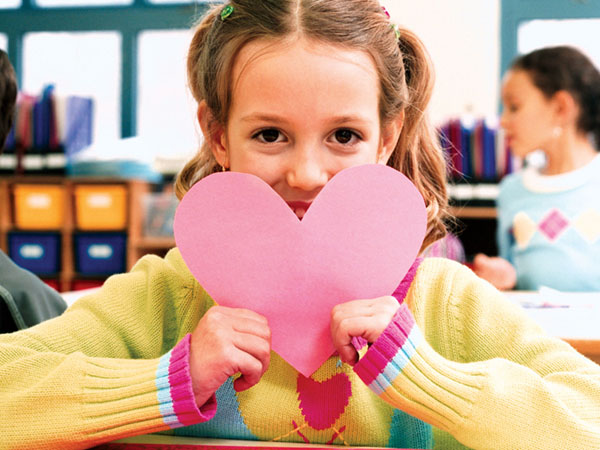
Smiling child holds pink paper heart in classroom.
© Digital Vision.—Photodisc/Getty Images

In this lesson mini, students explore Valentine’s Day as a cultural tradition by asking questions, examining images and texts, and sharing observations. Across multiple activities, students build vocabulary related to Valentine’s Day, learn about how people celebrate and communicate through cards and letters, and investigate the ways that kindness and caring help build communities. Students participate in collaborative discussions, create shared and individual projects, write simple messages, and exchange kind notes with classmates. Through reading, writing, art, and hands-on experiences, students develop an understanding of traditions, communication, and respectful interactions in ways that connect to their own lives and classroom community.

Ideas for Implementation
Social Studies
Literacy
Library media
Learning centers
Intervention or enrichment
Key Vocabulary & Definitions
candy (noun): a sweet made of sugar, often with flavoring and a filling
card (noun): a thick piece of paper that is usually folded in half with a greeting or an invitation, such as a Valentine’s Day card
celebrate (verb): to observe in some special way, such as a birthday celebration
flower (noun): a plant part that occurs singly or in groups, has often colorful petals, and is involved in the development of seeds and fruit, such as red roses
friend (noun): a person who has a strong liking for and trust in another
gift (noun): something usually given on special occasions such as birthdays
kindness (noun): an act or instance of being kind
love (noun): a quality or feeling of strong or constant affection for and dedication to another
valentine (noun): a greeting card shared on Valentine’s Day
Authentic Learning Extensions
Authentic learning opportunities for studying Valentine’s Day involve real-world experiences and practical applications that help students understand the importance of sharing kindness in a meaningful way. Here are some examples:
Everyday Kindness Connections: Provide opportunities for students to apply what they learn by practicing kindness in real ways. Students might write or draw kind messages for classmates, school staff, or family members. Facilitate reflection by asking students how giving and receiving kind messages makes people feel and how these actions help build a caring classroom community.
Valentine’s Day Books: Read age-appropriate books about Valentine’s Day that highlight friendship, caring, and community. After reading, invite students to ask questions about the characters’ actions and discuss how the characters show kindness. Follow up with a simple art or writing task, such as creating heart-shaped drawings or contributing pages to a class book that shows how students show kindness or celebrate Valentine’s Day in their own lives.
Valentine’s Day Traditions Around the World: Invite students to explore how people in different places celebrate Valentine’s Day, using kid-friendly texts and visuals. Encourage students to notice similarities and differences, focusing on shared ideas such as giving cards, sharing kind words, or spending time with others. Have students draw pictures or dictate simple sentences to explain one way that people show kindness in another place and how it is similar to what they do.
Valentine’s Day Videos: Show short, age-appropriate videos that explain Valentine’s Day traditions or history in simple terms. Before viewing, invite students to share what they already know or wonder about the holiday. After viewing, ask students what they noticed, what felt familiar, or what surprised them. Extend the learning by having students sequence images, act out a tradition, or draw a picture that represents something they learned from the video.

Choose Activity

4
Sharing Kindness on Valentine’s Day

Activity

1 :

Valentine’s Day Words and Acts of Kindness

By the end of the activity, students will be able to explain how people celebrate Valentine’s Day and how acts of kindness help build community, using key vocabulary words.

30-40

Minutes

Materials

Blank paper (one sheet per student)
Clipboard (one per student)
Valentine’s Day–themed images
Whiteboard and display
Writing utensils

Resources

Prepare for the Activity: Print and cut out the Valentine’s Day–themed words for the Valentine’s Day Word Scavenger Hunt. Place the words around the room for students to find. Depending on class size, consider hiding more than one set of words so that students don’t cluster.
1
Tell students that today they will learn about Valentine’s Day and how people celebrate it.
2
Begin the activity by displaying Valentine’s Day–themed images from Britannica Library, ImageQuest Jr., or another royalty-free resource (e.g., Lollipops and Candy Hearts, Friends Hugging, Valentine’s Day Greeting Card, Heart-Shaped Box of Sweets). Ask students to describe what they notice in each image and what clues the images give about how people might be celebrating. Encourage students to build on one another’s observations.
3
Facilitate a class brainstorm around Valentine’s Day. Ask students:
What is Valentine’s Day?
How do people celebrate it?
How do these celebrations show kindness or caring for others?
4
Draw a bubble web on the board, and invite students to share words that come to mind when they think about Valentine’s Day. Record their ideas on the board. Offer examples only if students are having trouble coming up with ideas (e.g., heart, kind, hug, friend, mail, red, sweet).
5
Display the Picture Glossary graphic organizer, and distribute a printed copy to each student. Model how to use the graphic organizer by writing the word “heart” in the first column and drawing a “♥️” in the second column. Explain that pictures can help show what words mean. Invite students to copy the example from the board.
6
Display the What Is Valentine’s Day? article, and read aloud the “What Is Valentine’s Day?” section. The remainder of the article will be read in Activity 2. Ask students:
What did you learn about Valentine’s Day from the article?
7
Read the “What Is Valentine’s Day?” section aloud a second time, and pause at the words love, valentines, and flowers. Ask students what they think each word means based on the text or their experiences. Share definitions if needed. After the reading, write the three words on the board. Have students copy the words on their Picture Glossary graphic organizer and draw a visual representation of them. Invite students to show their work to a nearby classmate.
8
Share with students that they will continue practicing Valentine’s Day vocabulary by playing a Valentine’s Day Word Scavenger Hunt game. Tell students that their job is to find 10 Valentine’s Day–themed words hidden around the classroom. As they find them, they will write the words on a piece of paper. Review expectations for respectful movement and helping classmates if needed.
9
Distribute a clipboard, a blank sheet of paper, and a writing utensil to each student. Instruct students to walk around the room and find the 10 hidden words. Remind them to write the words on the paper when they find them. Allot a set time for students to complete the task.
10
After students finish, have them draw a visual representation of each word. Then call on volunteers to share what they came up with and explain how the word connects to Valentine’s Day or kindness.
11
Wrap up the activity by asking students to use the new vocabulary words in sentences.
12
Close by displaying the Hands Making Heart Shape image and asking students to make the same shape with their own hands. Ask:
How can people show kindness in our classroom or community?
Language Support: For the Valentine’s Day Word Scavenger Hunt, group students strategically so that they are paired with others who share their same language. Provide a bilingual dictionary or glossary to support students’ understanding of key vocabulary. Encourage students to use drawings or gestures to communicate meaning.
Write Sentences: Challenge students to use the words from their Picture Glossary graphic organizer to write simple sentences (e.g., “I love my family”). Invite students to explain how their sentences show caring or kindness.
Valentine’s Day Charades: Instead of having students complete a scavenger hunt, consider having them participate in a game of Valentine’s Day charades with key vocabulary words from the What Is Valentine’s Day? article. This encourages students to develop their nonverbal communication skills and use body language to express important ideas.
Parallel Teaching: For collaborative teaching and learning environments, this learning activity is well suited to a Parallel Teaching strategy. In this model, the class is divided into two groups, and each teacher delivers the same activity simultaneously to their group. This reduces the student-teacher ratio, allowing for more interaction and individualized attention. With smaller groups, students are more likely to participate actively and receive immediate feedback, which fosters a deeper understanding of the content and promotes a more engaging learning experience. Evidence suggests that small-group instruction leads to increased student engagement and improved academic outcomes.
Sharing Kindness on Valentine’s Day

Activity

2:

Valentine’s Day Class Book

By the end of the activity, students will be able to describe traditions connected to Valentine’s Day and explain ways people show love and kindness, using a collaborative class book.

>40

Minutes

Materials

Coloring supplies
Materials to decorate heart cutouts (e.g., glitter, paint, watercolors)
Teacher model of a completed Class Book Page handout
Whiteboard and display
Writing utensils

Resources

Prepare for the Activity: Print the Heart Cutouts page, and cut out one heart for each student to decorate. These will be used on the front and back covers of the class book. Prepare a model of a completed Class Book Page handout to help students understand the task.
1
Tell students that today they will explore Valentine’s Day by learning about its traditions and thinking about how people show love and kindness.
2
Begin the lesson by displaying the images from the What Is Valentine’s Day? article and asking students to share what they notice. Invite students to explain what clues the images give about how people celebrate Valentine’s Day.
3
Distribute one printed copy of the What Is Valentine’s Day? article to each student. Then display the article and read it aloud. Pause and ask the following guiding questions after each section:
How do people celebrate on Valentine’s Day?
How did Valentine’s Day start?
How did Valentine’s Day get its name?
Invite students to support their answers using details they hear in the text.
4
Highlight that on Valentine’s Day people show love and kindness in special ways. Ask students to share what the words love and kindness might mean based on the article and their own experiences. Ask:
What are some ways people can show love and kindness on Valentine’s Day?
Encourage students to refer to the text and to think of additional possibilities without confirming responses.
5
Allot time for students to review the article independently. Ask them to circle words that relate to Valentine’s Day. Bring the class back together and review students’ findings.
6
Explain to students that they will make a class book about how to show love and kindness. To do this, they will draw and write about how they can show love and kindness to their friends and family on Valentine’s Day. Display the model of a completed Class Book Page handout to clarify expectations while emphasizing that each student’s idea should be their own. Emphasize that students should do the following:
a)
Draw and label their picture.
b)
Complete the sentence at the bottom that begins “I show love and kindness by.”
7
Give each student a copy of the Class Book Page handout and coloring supplies. Allot time for students to complete the task.
8
After students finish, invite them to sit in a circle and present their work by showing their pictures and reading aloud their sentences. Guide the class in collaboratively suggesting a title for the class book. Afterward, collect each page to make the book.
9
Distribute one small heart cutout to each student, along with materials to decorate them. Tell students their hearts will be added to the front and back covers of the class book.
10
Wrap up the lesson by asking students to share with a nearby classmate what they discovered about love and kindness and how they plan on being kind and showing that they care on Valentine’s Day.
Language Support: Pre-teach key vocabulary that appears in the What Is Valentine’s Day? article, and provide a translated copy of the text for students to read before class. During class, provide visual aids to help students understand the guiding questions. During circle time, support students in presenting their work by providing sentence starters (e.g., “My picture shows…”) without modeling complete answers.
Class Book Page: Provide an adapted version of the Class Book Page handout with a word bank of key Valentine’s Day words. Offer multiple sentence starters to support student choice and expression.
Order the Images: Prepare a series of stories that show love and kindness, and challenge students to put them in the correct order. This approach helps students build their sequential thinking skills.
Comic Strip: Instead of having students create a collaborative class book, have them draw, label, and/or write a comic strip that represents how they can show love and kindness on Valentine’s Day. Invite students to think about a storyline that has a logical sequential order.
One Teaching, One Assisting: For collaborative teaching and learning environments, this learning activity is well suited to a One Teaching, One Assisting strategy. In this model, one teacher leads the activity while the other circulates, assisting individual students as needed. This ensures that when students encounter difficulties, they receive immediate help in the form of personalized support and answers to their questions. By addressing students’ unique needs and keeping them on track, this approach enhances individual learning experiences and fosters a supportive classroom environment. Studies indicate that immediate feedback and individualized attention can significantly enhance student understanding and retention of material.
What Is Valentine’s Day? Article Reading: One teacher leads the article reading and discussion. The other teacher assists students in understanding the key ideas. Student responses are recorded to reflect class thinking.
Activity Introduction: Both teachers introduce the activity and invite students to think about how people celebrate Valentine’s Day.
Article Words Hunt: The lead teacher instructs students to review the article independently and circle words that represent Valentine’s Day. The assisting teacher helps students find these key words. Both teachers bring the class back together and review findings.
Class Book: The lead teacher explains to students that they will draw, label, and write about how to show love and kindness on Valentine’s Day to make a class book. The assisting teacher distributes the handout. Both teachers circulate and offer support as needed as students work independently.
Activity Wrap-Up: The lead teacher invites students to sit in a circle and share their work and brainstorm a book title. The assisting teacher supports students in following directions and staying engaged. The lead teacher directs students back to their seats, and the assisting teacher distributes the heart cutouts and decorating supplies. The lead teacher explains how the hearts will be used.
Sharing Kindness on Valentine’s Day

Activity

3:

Valentine’s Day Cards

By the end of the activity, students will be able to write simple Valentine’s Day messages that express kindness and caring on a greeting card.

>40

Minutes

Materials

Materials to decorate Valentine’s Day cards (e.g., stamps, heart cutouts, glitter, gems, buttons)
Sample Valentine’s Day cards
Valentine’s Day–themed images
Whiteboard and display
Writing utensils

Resources

1
Tell students that today they will explore Valentine’s Day traditions and think about how people share kind messages with others. Read aloud the “What Is Valentine’s Day?” section of the What Is Valentine’s Day? article for review, and ask students:
How do people show love on Valentine’s Day?
2
Begin the lesson by asking:
Have you ever received a greeting card? For what special occasion?
Have you ever written a Valentine’s Day card?
How do you think people feel when they send a card or receive a valentine?
3
Display Valentine’s Day images from Britannica Library, ImageQuest Jr., or another royalty-free resource, and invite students to share their observations about colors, words, and pictures.
4
Divide the class into groups of four or five students, and provide a few sample Valentine’s Day cards with age-appropriate messages. Ask students to read the messages on each card and discuss what they observe.
5
While students are discussing the cards, write the following questions on the board to guide the follow-up discussion:
What colors does each card have?
How are they decorated?
What images do you see?
Which cards do you like, and why?
Afterward, gather the class and ask students to share their ideas.
6
Explain to students that they will write a Valentine’s Day card for someone they care about, such as a family member. Call on them to list different family members, and record their answers on the board.
7
Ask students, “What messages can we send our family on Valentine’s Day?” As students share, record their ideas on the board (e.g., “Happy Valentine’s Day!” “Be My Valentine!” “Things I Love About You…” “I Heart You!” “You Are Amazing!”). Distribute a Valentine’s Day Cards handout to each student, and have them copy down these sentences in Part 1.
8
Invite students to think about which family member they want to write a Valentine’s Day card for, and then write the sentence frame “I love you because….”
9
As a class, brainstorm different reasons why students love their family members, and write their ideas on the board. Then have students practice writing a few sample sentences independently in Part 2 of the handout.
10
Distribute a Valentine’s Day Card template. Have students fold it in half. First have them write on the front cover, and then have them complete the sentence “I love you because…” on the inside. Invite them to refer to their Valentine’s Day Cards handout for support. Afterward, distribute materials so that students can decorate their cards.
11
After students finish, explain that they can mail the cards to their family members, and model how to address an envelope.
12
Wrap up the lesson by asking students to predict what their family members will say when they receive their Valentine’s Day cards and what feelings the cards might create.
Language Support: Pre-teach key vocabulary to support students in writing their cards. Provide an adapted Valentine’s Day Cards handout with a word bank supported by visual aids and a variety of sentence starters in English and the students’ home languages. Group students with supportive peers for the greeting card discussion.
Card Preparation: Consider folding the cards for students ahead of time to expedite the card-making process. Also, give emerging writers an adapted card template with the option of drawing and labeling their pictures rather than writing. This differentiation aims to cater to all students’ abilities.
Independent Reading: Challenge students to read the What Is Valentine’s Day? article, and ask them to write the answers to the following questions:
How do people show love on Valentine’s Day?
What month do people celebrate Valentine’s Day?
What is your favorite Valentine’s Day tradition?
This activity gives students an opportunity to practice their reading comprehension and writing skills.
Classroom Kindness Card Exchange: Instead of having students write a greeting card for a family member, have them write it to a classroom friend. To support inclusion and community building, ensure that every student both gives and receives a card.
Team Teaching: For collaborative teaching and learning environments, this learning activity is well suited to a Team Teaching strategy. In this model, sometimes referred to as “tag team teaching,” both teachers deliver instruction together, often alternating or integrating their teaching styles seamlessly. This collaborative approach provides students with multiple perspectives and teaching styles, enriching their learning experience. By modeling effective teamwork and communication, this approach demonstrates how different viewpoints can enhance understanding and create a dynamic and interactive classroom environment. Evidence indicates that team teaching can enhance student engagement and provide a richer, more diverse educational experience.
Activity Introduction: Teacher A reviews the “What Is Valentine’s Day?” section of the article and facilitates a class discussion focused on Valentine’s Day traditions. Teacher B displays images from ImageQuest Jr. or another royalty-free resource and invites students to share their observations.
Valentine’s Day Cards: Teacher A divides the class into groups and provides a few sample Valentine’s Day cards for students to discuss. Teacher B explains to students that they will write a Valentine’s Day card for a family member.
Valentine’s Day Messages: Teacher A invites students to brainstorm Valentine’s Day messages, and Teacher B distributes a Valentine’s Day Card handout to each student and has them copy down the messages from the board and practice writing sentences in the boxes.
Greeting Cards: Teacher A distributes a Valentine’s Day Card template and models how to complete it. Teacher B distributes materials so that students can decorate their cards.
Wrap-Up: Both teachers ask students to predict what their family members will say when they receive their Valentine’s Day cards.
Sharing Kindness on Valentine’s Day

Activity

4:

Valentine’s Day Mailbox

By the end of the activity, students will be able to understand how people send and receive messages and explain how kind words can be shared through letters and greeting cards.

>40

Minutes

Materials

Class lists (one per student; see “Prepare for the Activity”)
Coloring supplies
Glue (one per student)
Images of mailboxes
Materials to decorate mailboxes (e.g., stamps, stickers, Valentine’s Day–themed cutouts)
Paper bags (one per student)
Whiteboard and display
Writing utensils

Resources

Prepare for the Activity: Divide the class in half, and prepare two class lists so that students receive the names of only those students to whom they will write messages. Print enough copies of the Cupid Delivery handout so that each student will have enough Valentine’s Day cards for the students on their lists. Prepare a sample Valentine’s Day “mailbox” or set aside materials to model the task in step 4.
1
Tell students that today they will explore how people send messages, by making Valentine’s Day mailboxes and exchanging kind notes.
2
Begin the lesson by displaying the Sending Messages image. Ask students:
How do you think people communicated before they had cell phones?
Have you ever written a letter?
3
Show images of mailboxes from Britannica Library, ImageQuest Jr. or another royalty-free resource, and invite students to share their observations. Ask:
How are letters delivered today?
Do you have a mailbox at home?
What do you use it for?
4
Explain to students that today they will make Valentine’s Day “mailboxes” and then write and deliver valentines to their friends. Invite students to predict how the mailboxes will be used before showing a finished example. Show students a finished Valentine’s Day mailbox craft.
a)
Provide each student with a paper bag, coloring supplies, glue, Valentine’s Day–themed cutouts for decorations, and writing utensils.
b)
Instruct students to decorate their paper bags and write their names on the front of the bags.
c)
Model how to do this to ensure students understand the task. As students work, circulate the room and offer support as needed.
5
After students finish decorating their mailboxes, have them place their mailboxes on their desks or in another designated area that best fits the needs of your classroom.
6
Share that now it’s time to write messages that will be delivered to students’ personal mailboxes. Distribute to each student a Cupid Delivery handout and a class list to use as reference when writing their friends’ names on their messages.
7
Before students begin writing independently, facilitate a group discussion about what it means to be a good friend. Write the sentence starter “You are a good friend because…” on the board, and invite students to share their ideas. Encourage students to think about actions that show kindness and respect.
8
Have students complete the sentence starter “You are a good friend because…” and the “To…” and “From…” parts of the valentines for the students on their lists. Allot a set time for students to complete the task.
9
Instruct students to deliver their valentines to their classmates by placing each valentine in the correct mailbox. Review expectations for respectful movement and careful handling of classmates’ mailboxes.
10
Bring the class back together, and invite students to share how they felt sending and receiving Valentine’s Day messages.
11
Wrap up the lesson by asking students to reflect on how communication has changed over the years. Ask:
How do we send messages today? How has this changed over the years?
How do you think people will send messages in the future?
12
At the end of the school day, students will take home their mailboxes full of valentines from their friends.
Language Support: Provide an adapted version of the Cupid Delivery handout with additional sentence starters and a word bank supported by visual aids. Pair multilingual learners with supportive peers to complete the writing task.
Valentines: Consider dividing the class into four to six groups to reduce the number of valentines each student has to write. This approach makes the writing task more manageable for emerging writers.
How We Communicate: Challenge students to read or listen to the Britannica Library How We Communicate article to further reflect on how communication methods have evolved throughout history. This approach supports students in building independent reading skills or improving their listening comprehension.
Mailbox Craft: Consider varying the mailbox craft by using shoeboxes instead of paper bags. Precut mail slots on the lid of each shoebox, and cut five pieces of red, white, or pink construction paper for students to use to cover their shoeboxes.
Parallel Teaching: For collaborative teaching and learning environments, this learning activity is well suited to a Parallel Teaching strategy. In this model, the class is divided into two groups, and each teacher delivers the same activity simultaneously to their group. This reduces the student-teacher ratio, allowing for more interaction and individualized attention. With smaller groups, students are more likely to participate actively and receive immediate feedback, which fosters a deeper understanding of the content and promotes a more engaging learning experience. Evidence suggests that small-group instruction leads to increased student engagement and improved academic outcomes.
Sharing Kindness on Valentine’s Day

Activity

5:

Minutes

Materials

copy text here
copy text here

Resources

Prepare for the Activity:
1
copy text here
2
copy text here
3
copy text here
a)
copy text here
TEXT BLOCK: Lorem ipsum dolor sit amet, consectetur adipiscing elit, sed do eiusmod tempor incididunt ut labore et dolore magna aliqua. Ut enim ad minim veniam,
Lorem ipsum dolor sit amet, consectetur adipiscing elit, sed do eiusmod tempor incididunt ut labore et dolore magna aliqua. Ut enim ad minim veniam, quis nostrud exercitation ullamco laboris nisi ut aliquip ex ea commodo consequat. Duis aute irure dolor in reprehenderit in voluptate velit esse cillum .
copy text here
copy text here
Lorem ipsum dolor sit amet, consectetur adipiscing elit, sed do eiusmod tempor incididunt ut labore et dolore magna aliqua. Ut enim ad minim veniam, quis nostrud exercitation ullamco laboris nisi ut aliquip ex ea commodo consequat. Duis aute irure dolor in reprehenderit in voluptate velit esse cillum .
copy text here
copy text here
copy text here
© Encyclopædia Britannica, Inc. All rights reserved.
