

Lesson MINI

Britannica School logo in navy blue and green text

LESSON MINI

Women Shaping History and Society

Grade:

6-8

Topic:

Women's History Month

Unit:

Women’s History
Eye icon in white on red background

Overview

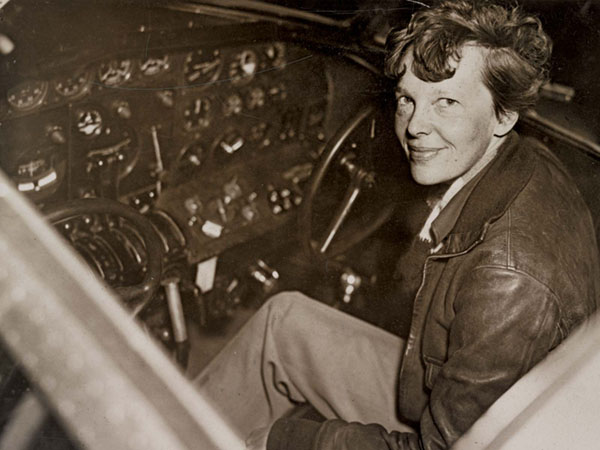
Black and white photo of woman seated in airplane cockpit smiling at camera.
©New York World-Telegram and the Sun Newspaper Photograph Collection/Library of Congress, Washington, D.C. (LC-USZC4-2758)

In this lesson mini, students investigate how women from different historical periods, cultural backgrounds, and regions have shaped societies through civic action, advocacy, innovation, and leadership. Using inquiry-based strategies, students analyze primary and secondary sources to examine women’s contributions to the suffrage movement, civil rights, global access to education, and STEM-related fields. Across the activities, students ask questions, evaluate evidence, and identify patterns in how rights and opportunities have expanded over time. The unit emphasizes historical thinking, research skills, and civic understanding while supporting students in developing a broader and more inclusive understanding of women’s history and its relevance today.

Ideas for Implementation
Social Studies
Literacy
Library media
Learning centers
Intervention or enrichment
Key Vocabulary & Definitions
activism (noun): a doctrine or practice that emphasizes direct, vigorous action, especially in support of or opposition to one side of a controversial issue
civil rights (noun): rights protected by law that help ensure people are treated fairly and have equal access to opportunities such as education, voting, and a fair trial
human rights (noun): the rights that belong to an individual or group of people simply for being human, such as the rights to feel safe, to have food, and to have shelter
suffrage (noun): the right to vote in elections
voting rights (noun): rights protected by law that ensure people can participate in free and fair elections
women’s rights (noun): legal, political, and social rights for women equal to those of men, including access to education, work, and voting
Authentic Learning Extensions
Authentic learning opportunities for studying women’s contributions to key moments in history involve real-world experiences and practical applications that help students understand concepts related to women and leadership and how those concepts have evolved over time. Here are some examples:
Community History Interviews: Students research a historical woman from the unit and then interview a community member about how women’s rights and opportunities for leadership have changed during their lifetime. Students compare lived experiences with historical sources and present patterns they discover about women’s leadership and social roles through evidence-based discussion or visual displays.
Digital Exhibit Creation: Students curate a small digital exhibit using images, quotes, and primary sources related to women studied in the unit and explain how these women influenced or responded to key historical moments. The exhibit is designed for a real audience such as families, other classes, or the school website, requiring students to make intentional choices about accuracy, representation, and clarity.
Library and Archive Research Projects: Students use the school or local library to investigate how women are represented in different types of sources such as biographies, encyclopedias, and historical newspapers. Students analyze what stories are emphasized or missing and how these representations shape understandings of women’s contributions and leadership, and share conclusions supported by evidence with an audience beyond the classroom, such as through a library display or school publication.
Public Book Circles: Instead of traditional book reviews, students participate in structured discussion circles focused on books written by or about women studied in the unit. Students generate inquiry questions about leadership, agency, and historical change and share insights through classroom displays, newsletters, or recorded discussions intended for a wider school audience.

Choose Activity

4
Women Shaping History and Society

Activity

1 :

Susan B. Anthony and the History of Women’s Suffrage

By the end of the activity, students will be able to explain Susan B. Anthony’s role in the American women’s suffrage movement and analyze how her actions contributed to expanded voting rights over time.

>40

Minutes

Materials

Digital devices such as Chromebooks or tablets (one per student)
Whiteboard and display
Writing utensils

Resources

Prepare for the Activity: Print and cut out the Susan B. Anthony Quotes for distribution in step 12.
1
Tell students that today they will explore the life and work of Susan B. Anthony through questions, discussion, and analysis. Invite students to consider how individuals can influence social change.
2
Begin by introducing key background concepts. Write the following definitions on the board and read them aloud with students:
human rights: the rights that belong to an individual or group of people simply for being human, such as the rights to feel safe, to have food, and to have shelter
civil rights: the rights protected by law that help ensure people are treated fairly and have equal access to opportunities such as education, voting, and a fair trial
3
Ask students to briefly reflect on the definitions and share examples. Encourage students to draw from their own experiences and prior knowledge. Give each student a Susan B. Anthony handout, and direct them to brainstorm examples of human rights and civil rights. Invite them to record what they come up with in Part 1 of the handout. Afterward, invite volunteers to share ideas and look for patterns or similarities across responses.
4
Facilitate a class discussion about rights by asking open-ended questions such as the following:
What rights are most important to you?
What rights do you have today that people in the past did not have?
What rights do women have today that they did not have in the past?
How do you think women’s lives are different today than they were 100 years ago?
Why do you think women’s rights changed and evolved?
5
Guide students to consider how rights evolve by asking them to think about historical context rather than giving direct answers. Encourage students to support their ideas with evidence or examples.
6
Introduce the term women’s suffrage by asking students what they think it might mean based on the word suffrage. After students share ideas, confirm that women’s suffrage refers to women’s legal right to vote in elections. Clarify that women in the United States gained the constitutional right to vote in 1920 and that many activists worked for decades toward this goal.
7
Explain that Susan B. Anthony was one of many women and men who advocated for expanded rights. Tell students that they will investigate her contributions through multimedia sources.
8
Display the Susan B. Anthony video, and ask students to refer to Part 2 of their handout. Tell students to take notes focused on actions Anthony took, challenges she faced, and questions they still have. After students view the video, allow time for them to use their notes to answer the questions in Part 2. Consider playing the video twice to support comprehension. Review responses together, and encourage students to explain how they know their answers are accurate.
9
Display and preview the Susan B. Anthony article. Ask students to examine headings, images, and captions before reading and predict what they might learn. Give each student a digital device, and have them read the article independently on their digital devices and then work with an assigned partner to complete Part 3 of the handout. Encourage partners to cite evidence from the text when answering questions.
10
Tell students they will now analyze historical quotes to better understand perspectives from the past. Explain that quotes can reveal beliefs, values, and experiences of a specific time period.
11
Model how to approach a quote by sharing Anthony’s “Failure is impossible” quote and asking students guiding questions about its meaning. Ask students about what words stand out, what the quote suggests about the time period, and what questions it raises.
12
Divide the class into groups of four or five students. Give each group a slip of paper from the Susan B. Anthony Quotes teacher resource. Invite students to discuss their quote by examining its language, historical context, and possible meanings. Ask them to consider how the ideas in the quote connect to rights, equality, or civic participation. Explain that they do not need to personally agree with the quote in order to analyze it.
13
Direct students to write their assigned quote in Part 4 of the handout and, after their group discussion, write a quote analysis that explains their thinking using evidence from the text and discussion.
14
Bring the class back together, and ask each group to share interesting topics that came up in conversations.
15
Wrap up by inviting students to reflect on learning through inquiry-based questions such as the following:
What was Susan B. Anthony’s most important contribution?
How did her work impact women’s rights?
What are some current issues that impact women today?
Language Support: For students who benefit from additional language support, pre-teach abstract concepts and key vocabulary related to women’s rights supported by visual aids (e.g., civil rights, human rights, women’s rights, suffrage movement). Provide the Susan B. Anthony video and article before class to expose students to the lesson’s material. Guide students to research Anthony’s life in their home languages to build background knowledge. Pair and group multilingual learners with supportive peers who speak their home languages for the article reading and quote analysis task.
Quote Analysis: Provide sentence starters and additional guiding questions to help students analyze the quote. Sentence frames should focus on evidence, context, and interpretation rather than opinion.
Primary Source Analysis: Challenge students to research and analyze a speech by Anthony and then write a written reflection about its key message. This approach exposes students to primary sources and promotes a deeper analysis of women’s rights and the women’s suffrage movement.
Biographical Poster: Instead of having students analyze quotes, have them synthesize the information presented in the video and article and create a collaborative biographical poster supported by visual aids. Encourage students to include timelines, key events, and questions they still have.
Parallel Teaching: For collaborative teaching and learning environments, this learning activity is well suited to a Parallel Teaching strategy. In this model, the class is divided into two groups, and each teacher delivers the same activity simultaneously to their group. This reduces the student-teacher ratio, allowing for more interaction and individualized attention. With smaller groups, students are more likely to participate actively and receive immediate feedback, which fosters a deeper understanding of the content and promotes a more engaging learning experience. Evidence suggests that small-group instruction leads to increased student engagement and improved academic outcomes.
Women Shaping History and Society

Activity

2:

Malala Yousafzai: Exploring Voice, Education, and Global Change

By the end of the activity, students will be able to analyze how Malala Yousafzai has used her voice and actions to advocate for access to education and examine why education is considered a fundamental human right in different societies.

>40

Minutes

Materials

Coloring utensils
Digital devices such as Chromebooks or tablets (one per student)
Map of Pakistan (for teacher display)
Posterboards (one per group, as needed)
School-approved Internet tools
Skit props (one per group, as needed)
Whiteboard and display
Writing utensils

Resources

1
Tell students that today they will investigate the life and experiences of Malala Yousafzai as part of Women’s History Month, with a focus on how individuals can influence social change. Explain that students will explore Yousafzai’s story through questions, sources, and collaborative work.
2
Begin by displaying a map of Pakistan from Britannica Library, ImageQuest, or another royalty-free resource, and invite students to observe it closely. Ask students what they notice and what questions they have about the country and its location. Provide brief, neutral context by explaining that Yousafzai grew up in Pakistan during a time of significant change and conflict in some regions, which affected access to education for many children, especially girls.
What do you know about Malala Yousafzai?
Do you think access to education is a basic human right? Why or why not?
Girls and women have been denied access to education in the past and present. Why do you think this happens?
Record student questions on the whiteboard and explain that they will revisit these questions throughout the lesson as they examine multiple sources.
3
Display the Malala Yousafzai video, and give each student a copy of the Malala Yousafzai handout. Before playing the video, review the handout questions to clarify expectations and encourage students to listen for evidence that helps answer their own questions. Invite students to independently take notes and complete the video questions in Part 1 of the handout as they watch. Consider playing the video twice to support comprehension. After viewing, guide a brief whole-group discussion by asking students what new information stood out to them and what questions they still have, and list key student-generated ideas on the whiteboard.
4
Display the Malala Yousafzai article, and explain that the article includes sections on Yousafzai’s early life, activism, international recognition, and later work. Give each student a digital device, and ask them to read the article and answer the questions in Part 2 of the handout. Encourage students to highlight or note evidence from the text that supports their responses. Allow time for students to work independently, and circulate to support comprehension as needed.
5
After students finish, facilitate a whole-group discussion that focuses on comparing answers and discussing how students used evidence from the text to support their thinking.
6
Explain that students will now work in groups of three to five to create a representation of Yousafzai’s story. Emphasize that the goal is to communicate what they have learned using evidence from the sources, rather than sharing opinions. Offer students the option of writing a diary entry, making a biographical collage or posterboard, writing and performing a skit, developing a digital story, or making a video. Clarify expectations by describing what successful projects include, such as accurate information, clear organization, and connections to education and social change.
7
Invite students to use the Malala Yousafzai article, video, and handout, and additional school-approved Internet tools, to research, plan, and create their work collaboratively.
8
Allot time for students to work together. As students finish, invite them to present their work to their peers. Consider having students present during the next class period. After each presentation, invite classmates to ask clarifying questions about the content and share observations about what they learned from the presentation.
9
Write the following Malala Yousafzai quote on the board: “I raise up my voice—not so I can shout, but so that those without a voice can be heard. … We cannot all succeed when half of us are held back.” Invite students to reflect silently and then discuss with a nearby peer the ideas about voice, education, or change that they notice in the quote. Bring the class together, and ask volunteers to share interpretations supported by examples from the lesson.
10
Wrap up by returning to the original student questions on the board and asking students to identify which questions were answered and which remain open for further inquiry. Ask students to respond to the following questions:
What did you learn about Malala Yousafzai’s experiences and actions?
How does her story help us understand the role of education in societies?
What questions do you still have about access to education around the world?
Language Support: For students who benefit from additional language support, pre-teach key concepts and vocabulary supported by visual aids (e.g., activist, advocate, education). Provide structured directions, sentence starters, and guiding questions to support comprehension and expression during both the reading and the creative project. Provide the Malala Yousafzai video and article before class to support understanding.
Creative Project: To support students in portraying Yousafzai’s story, consider choosing one creative project (e.g., a diary entry in her voice) and scaffolding it with clear instructions, a rubric, guiding questions, and sentence starters. This approach allows students to focus more deeply on content and evidence while reducing cognitive load.
Book Review: Challenge students to choose a book or memoir written by Yousafzai and write a book review. Students should focus on summarizing key ideas and explaining how the text contributes to their understanding of education and activism.
Speech Analysis: Instead of asking students to portray Yousafzai’s story through a creative project, choose one of her famous speeches and invite students to analyze it in small groups. Ask students to identify the main ideas, intended audience, and evidence used, without evaluating or judging the speech.
One Teaching, One Observing: For collaborative teaching and learning environments, this learning activity is well suited to a One Teaching, One Observing strategy. In this model, one teacher provides direct instruction to the entire class while the other observes student behavior and engagement to gather evidence of learning. This approach allows for detailed observation and assessment, helping identify students who need additional support or intervention. By focusing on student responses and participation, the observing teacher can ensure that the learning needs of all students are addressed in the activity. Research shows that targeted observation can lead to more effective intervention strategies, improving student performance.
Activity Introduction: Teacher A facilitates the inquiry-based introduction by prompting observations and questions about Yousafzai and Pakistan. Teacher B observes student participation and questioning.
Video Viewing: Teacher A displays the Malala Yousafzai video, distributes the handout, and reviews expectations. Teacher B observes how students engage with note-taking and discussion.
Article Reading: Teacher A invites students to read the Malala Yousafzai article independently and answer questions. Teacher B observes student strategies for reading and evidence use.
Creative Group Project: Teacher A organizes students into groups and reviews expectations. Teacher B circulates and observes collaboration, communication, and use of sources.
Final Reflection: Teacher A facilitates reflection and synthesis of learning. Teacher B observes how students articulate understanding and remaining questions.
Women Shaping History and Society

Activity

3:

Amelia Earhart and Women in Aviation

By the end of the activity, students will be able to describe the historical significance of Amelia Earhart, examine how women from diverse backgrounds have contributed to aviation, and identify social and historical factors that have influenced participation in STEM-related fields.

>40

Minutes

1
Tell students that during today’s activity they will learn about Amelia Earhart and discuss the factors that influenced women’s participation in aviation and other STEM-related fields.
2
Begin by inviting students to consider the question, “How do individual people influence history?” Allow students a brief moment to think before explaining that they will explore this question through the life of Amelia Earhart during Women’s History Month.
3
Display the Amelia Earhart image. Ask students to share observations and prior knowledge using open-ended prompts such as, “What do you notice?” and “What questions come to mind when you see this image?” Record student ideas and questions on the board.
4
Tell students that Earhart was a pioneering aviator in the early 20th century, and invite them to generate questions they have about her life, her achievements, and the time period in which she lived. Explain that they will use evidence to investigate these questions throughout the activity.
5
Display the Amelia Earhart video. After students view the video, ask them to reflect on what new information they discovered and which of their original questions were addressed. Encourage students to identify details that stood out to them and articulate why.
6
Explain that students will now explore an article about Earhart to learn more about her early life, career accomplishments, and historical legacy. Distribute digital devices and the Mini Biography graphic organizer. Review the organizer sections, and invite students to navigate to the Amelia Earhart article and read it independently, noting on the organizer the key facts and ideas they believe are most important.
7
Facilitate a discussion that encourages historical thinking by asking students to consider how technology, communication, and transportation in the past may have shaped exploration and discovery. Invite students to compare what tools were available during Earhart’s time with tools available today and discuss how this might influence historical investigations.
8
Transition to small-group work by explaining that Earhart was one of many women who contributed to aviation history. Divide students into groups of four or five, and invite each group to select another famous female pilot to research using Britannica Library and a school-approved search engine. Model how to generate neutral and effective search terms, and review expectations for responsible research.
9
Distribute one Famous Female Pilots: Research Guide per group. Ask students to gather information about their pilot’s background, achievements, and historical context, as well as to locate images that respectfully represent their subject. Encourage groups to discuss why their pilot’s story is historically significant.
10
After sufficient research time, invite each group to share an image and one key insight they discovered. Encourage classmates to ask clarifying or curiosity-driven questions that build understanding rather than evaluation.
11
Guide students in reflecting on the inquiry process by asking questions such as the following:
What strategies helped you find information?
What did you learn that surprised you?
What challenges did you encounter while researching?
12
Give each student a Skills Spotlight exit ticket, and ask them to write one insight about Earhart and one insight about another female pilot they learned about.
13
Invite students to transform their exit tickets into paper planes. Model the process using the Paper Plane Tutorial, and explain that the activity symbolizes sharing knowledge.
14
Pair students and have them exchange planes, reading and discussing each other’s key learning.
15
Wrap up by asking students to reflect on how learning about diverse historical figures can broaden understanding of history and whose stories are remembered. Encourage students to connect this idea to Women’s History Month.
Language Support: For students who benefit from additional language support, pre-teach key vocabulary supported by visual aids (e.g., pilot, airplane, aviation, flight), and offer students the opportunity to read the Amelia Earhart article in both English and in their home languages before class so that they can identify key ideas. Then group multilingual learners with bilingual peers or native English speakers for collaborative support. Provide a differentiated Mini Biography graphic organizer with sentence starters and a word bank to support students in completing the task.
Curated List: Offer each group a curated list of accomplished female pilots (e.g., Jacqueline Cochran, Bessie Coleman, Geraldine “Jerrie” Mock, and Amy Johnson) to ensure students do not repeat historical figures during the group presentations. This approach saves time and helps students keep focus.
Amelia Earhart Readings: Challenge students to read primary sources by Earhart, such as diary entries from the book Last Flight, to better understand and empathize with her life experience. This approach deepens students’ connection to Earhart.
Timeline: Instead of having students research additional female aviators, keep the class focused on Earhart’s early life, career accomplishments, and legacy. To do this, consider creating a collaborative classroom timeline that depicts Earthart’s life. Invite students to use articles and videos about Earhart from Britannica Library to complete the task.
Team Teaching: For collaborative teaching and learning environments, this learning activity is well suited to a Team Teaching strategy. In this model, sometimes referred to as “tag team teaching,” both teachers deliver instruction together, often alternating or integrating their teaching styles seamlessly. This collaborative approach provides students with multiple perspectives and teaching styles, enriching their learning experience. By modeling effective teamwork and communication, this approach demonstrates how different viewpoints can enhance understanding and create a dynamic and interactive classroom environment. Evidence indicates that team teaching can enhance student engagement and provide a richer, more diverse educational experience.
Activity Introduction: Teacher A invites students to generate questions about historical influence. Teacher B displays the Amelia Earhart image and records student observations.
Amelia Earhart Video: Teacher A facilitates the video viewing. Teacher B supports reflective discussion using student-generated questions.
Article Reading and Mini Biography: Teacher A supports independent reading. Teacher B assists students with the Mini Biography graphic organizer.
Group Research Project: Teacher A organizes groups and research tasks. Teacher B models inquiry-based research strategies and distributes the Famous Female Pilots: Research Guide.
Activity Wrap-Up: Teacher A distributes the Skills Spotlight exit ticket. Teacher B facilitates the paper plane exchange and reflection discussion.
Women Shaping History and Society

Activity

4:

Women’s History and Leadership Mural

By the end of the activity, students will be able to summarize key accomplishments of women from diverse cultural backgrounds who broke barriers to become leaders across different fields and explain why those contributions matter in a democratic society.

>40

Minutes

Materials

Art supplies for posterboards (one set for each group)
Digital devices such as Chromebooks or tablets (one per student)
School-approved search engine
Whiteboard and display
Writing utensils

Resources

1
Tell students that during today’s activity they will collaboratively create a Women’s History Classroom Mural that highlights historical and contemporary women whose actions and ideas have shaped communities, movements, and fields of study. Frame the activity as an investigation into how individual actions can contribute to social change.
2
Begin the lesson by guiding students through an inquiry-focused discussion about women’s history and civic participation. Ask open-ended questions such as the following:
How have different groups of people worked to expand rights and opportunities over time?
What challenges have women faced in different historical periods?
What examples can we find today of progress toward equality, and where do people continue to work for change?
3
Display the Bubble Web graphic organizer, and give a copy to each student. Invite the class to brainstorm women from history and the present whose names they already know. Encourage students to consider women from a variety of cultures, time periods, and fields. Ask questions such as the following:
What do you already know about this person?
What makes someone’s contribution important?
Record student responses on the displayed bubble web, and invite students to add their ideas to their own graphic organizers.
4
Provide each student with a digital device, and give them time to explore independently using a school-approved search engine and to add figures to their Bubble Web graphic organizer. Emphasize that students are looking for information, not opinions, and that multiple perspectives and backgrounds are valued. To support students in completing this task:
a)
Demonstrate how to generate neutral research questions and keywords.
b)
Model how to identify reliable sources, including how to navigate to Britannica Library articles related to women’s history and leadership.
c)
Work through one example search as a class before students begin working independently or with a partner.
5
Divide the class into pairs, and ask each pair to select one woman they are curious to learn more about. Explain that students will investigate their chosen figure and contribute a posterboard to a collective classroom mural that represents many experiences and contributions.
6
Explain that each posterboard should include factual information such as key accomplishments, historical context, and notable quotes when available. Ask students to include a brief personal reflection that explains what they found interesting or meaningful about their figure, without evaluating whether the actions were right or wrong. Encourage students to support their ideas with evidence from their research.
7
Invite students to use visual elements such as photographs, symbols, drawings, or headlines to communicate information clearly. Make art supplies available, and remind students that clarity and accuracy are more important than artistic skill.
8
As students work on their research and posterboard, circulate the room and offer support as needed.
9
When students finish, organize them into groups of two or three pairs to share their posterboards. Ask students to listen for similarities and differences among the figures represented and to note patterns they observe.
10
Bring the class back together, and invite volunteers to share discoveries by answering questions such as the following:
What did you learn about women’s history and leadership?
What connections did you notice between different women’s experiences?
11
Collect the posterboards, and work as a class to assemble the classroom mural in a shared space. Encourage students to decide together how to organize the mural so that it tells a story or shows connections.
12
Wrap up with a reflective discussion. Ask students to consider why societies choose to remember certain individuals and events. Pose questions such as the following:
Why is it important to study women’s history as part of our understanding of the past and present?
What are examples of actions individuals and communities can take to support fairness and equal participation today?
Language Support: For students who benefit from additional language support, provide graphic organizers with visual cues and key vocabulary related to history and civic action. Offer sentence starters that help students describe accomplishments and historical context. Pair multilingual learners with supportive peers to encourage collaboration and discussion.
Assigned Britannica Library Articles: Assign students historical and contemporary female leaders from a variety of fields using articles found in Britannica Library . This approach helps students become more familiar with the platform while exploring a reliable Internet source. In addition, assigning different female figures ensures there is no repetition and that a variety of accomplishments are showcased.
Sort and Categorize: After students complete the mural, invite them to work together to organize the figures by time period, field, or type of contribution. Ask students to explain their reasoning, supporting chronological thinking and categorization skills.
Written Response: After the final class discussion, challenge students to write a personal response to answer the question, “What are some small and big actions you can take to promote gender equality?” This approach helps students consolidate the key learning from the activity and the unit and build their independent writing skills.
Digital Media: Instead of having students create physical posterboards, consider creating a digital mural and having students create a variety of digital representations of their chosen female figures. Provide students the options of creating stories, videos, presentations, or collages using school-approved digital tools. This approach helps students build their technology skills.
One Teaching, One Observing: For collaborative teaching and learning environments, this learning activity is well suited to a One Teaching, One Observing strategy. In this model, one teacher provides direct instruction to the entire class while the other observes student behavior and engagement to gather evidence of learning. This approach allows for detailed observation and assessment, helping identify students who need additional support or intervention. By focusing on student responses and participation, the observing teacher can ensure that the learning needs of all students are addressed in the activity. Research shows that targeted observation can lead to more effective intervention strategies, improving student performance.
Activity Introduction: Teacher A activates students’ background knowledge by facilitating a discussion about women’s rights. Teacher B observes how students engage in the whole-group discussions.
Bubble Web: Teacher A instructs students to brainstorm and research historical and contemporary female role models. Teacher B observes how students work in the whole group and in pairs to complete the task.
Posterboards: Teacher A introduces the posterboard and mural activity, outlines expectations, and models how to conduct research. As students finish their work, Teacher A facilitates the group exchanges of work and the process for creating a collaborative classroom mural. Teacher B observes how students respond to the instructions and how they work to complete the tasks.
Final Reflection: Teacher A wraps up the lesson by facilitating the whole-group reflective discussion. Teacher B observes how students engage in the discussion.
Women Shaping History and Society

Activity

5:

Minutes

Materials

copy text here
copy text here

Resources

Prepare for the Activity:
1
copy text here
2
copy text here
3
copy text here
a)
copy text here
TEXT BLOCK: Lorem ipsum dolor sit amet, consectetur adipiscing elit, sed do eiusmod tempor incididunt ut labore et dolore magna aliqua. Ut enim ad minim veniam,
Lorem ipsum dolor sit amet, consectetur adipiscing elit, sed do eiusmod tempor incididunt ut labore et dolore magna aliqua. Ut enim ad minim veniam, quis nostrud exercitation ullamco laboris nisi ut aliquip ex ea commodo consequat. Duis aute irure dolor in reprehenderit in voluptate velit esse cillum .
copy text here
copy text here
Lorem ipsum dolor sit amet, consectetur adipiscing elit, sed do eiusmod tempor incididunt ut labore et dolore magna aliqua. Ut enim ad minim veniam, quis nostrud exercitation ullamco laboris nisi ut aliquip ex ea commodo consequat. Duis aute irure dolor in reprehenderit in voluptate velit esse cillum .
copy text here
copy text here
copy text here
© Encyclopædia Britannica, Inc. All rights reserved.
