

Lesson MINI

Britannica School logo in navy blue and green text

LESSON MINI

Earth Helpers: Take Action

Grade:

3-5

Topic:

Earth Day

Unit:

Protecting Our Planet
Eye icon in white on red background

Overview

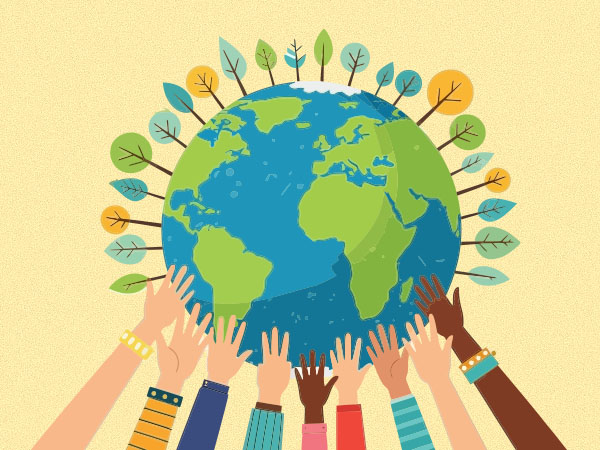
Diverse hands raised toward Earth surrounded by trees symbolizing global unity and sustainability.
© Ervan/stock.adobe.com; photo illustration Encyclopædia Britannica, Inc.

In this lesson mini, students learn how they can become Earth helpers by understanding environmental challenges and taking meaningful action. Through informational texts, videos, discussions, hands-on investigations, and creative projects, students explore Earth Day, climate change, global warming, sustainability, and the work of young environmental activists. Students compare causes and solutions, design responsible action plans, and identify realistic ways they can help protect the planet at school and at home.

Ideas for Implementation
Science
Literacy
Library media
Learning centers
Intervention or enrichment
Key Vocabulary & Definitions
activist (noun): a person who works to create positive changes around the world
biodiversity (noun): the variety of plants and animals in a place
climate (noun): the weather in an area over a long period of time
conservation (noun): the responsible use of resources so that future generations may use them too
global warming (noun): the increase, or rise, in Earth’s overall temperature
habitat (noun): the place where animals or plants naturally live and grow
natural resources (noun): resources found in nature that animals, plants, and people need to survive, such as water and air
pollution (noun): the contamination of the environment by waste, chemicals, or other harmful substances
sustainability (noun): the idea that humans must interact with the environment in a way that ensures there will be enough resources for future generations
weather (noun): the daily states of the atmosphere, or air, in any given place
Authentic Learning Extensions
Authentic learning opportunities for studying Earth Day involve real-world experiences and practical applications that help students understand the importance of conservation and sustainability in a meaningful way. Here are some examples:
Community Impact Project: Invite students to identify a real environmental issue in their school or neighborhood, such as litter, food waste, or energy use. Guide them in observing, collecting simple data, and creating a small action plan to address the problem. Students might organize a supervised cleanup, create reminder signs, or start a classroom recycling system. Conclude with a reflection discussion about how their actions made a difference.
Environmental Media Investigation: Display short, age-appropriate video clips about topics such as pollution, renewable energy, or wildlife protection. Have students identify the problem presented, explain why it matters, and discuss possible solutions. As a follow up, students can create a short public service announcement script, a class video, or an illustrated fact sheet sharing one action others can take.
School Awareness Campaign: Have students choose one focus area, such as saving water, reducing plastic use, recycling, or conserving energy. Have students work in small groups to research two supporting facts and design persuasive posters with clear messages and visuals. Display approved posters around the school, and discuss whether the campaign helps encourage positive behavior.
Sustainability Invention Showcase: Challenge students to design a simple invention that solves a real environmental problem in their school or community, such as by conserving resources or protecting biodiversity. Have students draw and label their design, explain how it solves an identified problem, and present their design to classmates or another audience. This activity reinforces problem-solving and responsible decision-making.

Choose Activity

5
Earth Helpers: Take Action

Activity

1 :

Earth Day: Learning and Taking Action

By the end of the activity, students will be able to explain the history and purpose of Earth Day and share one daily action they plan to take to help protect planet Earth.

>40

Minutes

Materials

Whiteboard and display
Writing utensils

Resources

1
Tell students that during today’s activity they will learn about Earth Day and how they can help care for the planet through simple daily actions.
2
Display the Earth Day article and ask:
What are the children doing? What else do you notice in the pictures?
What is Earth Day, and when do people celebrate it?
Have you ever celebrated Earth Day? If yes, what did you do?
Explain that Earth Day is celebrated on April 22 each year and focuses on caring for the environment.
3
Preview the Earth Day article, sharing that it covers the origins of this special celebration. Give each student a copy of the article along with the Earth Day Questions handout. Model how to highlight or underline one main idea in the first paragraph of the article. Then invite students to work with a partner to read the article, highlight main ideas, and answer the questions in Part 1 of the handout.
4
Bring the class back together to review the handout answers. Clarify any misunderstandings, and guide students to restate key ideas about the history and purpose of Earth Day.
5
Write the following definition of the word conservation on the board: “the responsible use of resources so that future generations can enjoy them too.” Ask:
What are examples of natural resources?
How can we protect them?
6
Display the Conservation video, and invite students to take notes in Part 2 of the Earth Day Questions handout as they watch. Remind students to listen for ways people can care for Earth. Then have them work with the same partner to answer the questions in Part 2. After student pairs finish, review the answers together as a class.
7
Tell students that they will create an Earth Day pledge by brainstorming positive daily actions they can take to protect the environment, such as bringing silverware instead of plasticware in their school lunches or remembering to turn off lights at home and school when not needed. Start by brainstorming ideas as a whole class and recording students’ ideas on the board. Encourage students to think about actions they can realistically do at home or at school.
8
Invite students to work in small groups to choose specific actions for their group pledge. Distribute one Earth Day Pledge handout to each group so that students can record five actions. Remind students that each action should be clear and written as a promise. As students work, circulate to offer assistance as needed.
9
After students finish, call on each group to share a few of their pledges. Encourage students to ask clarifying questions and offer positive feedback.
10
As a class, identify common patterns. Ask:
What are some pledges that were common in our class?
What changes can we start making at school and at home?
11
Wrap up the activity by having students sit in a circle for a community-building activity. Ask: “Why is Earth Day an important celebration?” Invite a few volunteers to share their ideas. Then, to reinforce the learning objective, have each student share one specific daily action they can take to protect the planet.
Language Support: Pre-teach key vocabulary supported by visual aids to help students better understand the activity. Offer students the option of reading the Earth Day article both in English and in their home languages. Also, while students work on the Earth Day pledge, group students strategically so that they are paired with others who share the same language.
Pledge Samples: To set expectations and offer support, provide an example of a finished pledge. In addition, consider providing an adapted Earth Day pledge handout that includes sentence starters and a word bank of key vocabulary. This approach supports students in generating ideas and writing focused pledges.
Earth Day Pledge Videos: Challenge student groups to create videos of their pledges and share them with their family and friends. This approach helps students build their oral communication skills.
Earth Day History Recap: Instead of having students work on pledges, consider having them craft a collaborative digital presentation summarizing the origins and purpose of the Earth Day celebration. This approach helps students develop their synthesis skills.
Parallel Teaching: For collaborative teaching and learning environments, this learning activity is well suited to a Parallel Teaching strategy. In this model, the class is divided into two groups, and each teacher delivers the same activity simultaneously to their group. This reduces the student-teacher ratio, allowing for more interaction and individualized attention. With smaller groups, students are more likely to participate actively and receive immediate feedback, which fosters a deeper understanding of the content and promotes a more engaging learning experience. Evidence suggests that small-group instruction leads to increased student engagement and improved academic outcomes.
Earth Helpers: Take Action

Activity

2:

Global Warming: What We Can Do

By the end of the activity, students will be able to explain what global warming is, identify its basic causes and effects, and describe at least one action they can take to help care for Earth.

>40

Minutes

1
Tell students that during today’s activity they will learn about global warming and explore what scientists understand about the topic and what actions people take to reduce their environmental impact.
2
Begin by writing the phrase “global warming” on the board and asking, “Have you ever heard of this term before? What does it mean?” On the board write, “Global warming is the increase, or rise, in Earth’s overall temperature.”
3
Display the Global Warming image, and read the caption aloud. Explain that rising temperatures can affect habitats, weather patterns, and living things. Invite students to turn and talk with a nearby partner about the possible effects of global warming. After a few minutes, reassemble the class, invite students to share their thoughts, and record student responses on the board.
4
Explain to students that they will learn about the greenhouse effect to better understand the causes of global warming as described in scientific research. Display the Greenhouse Effect video, and give each student a Global Warming Questions handout. Remind students to listen for what causes temperatures to rise. Have them take notes on the handout as they watch the video and then answer the questions in Part 1. After students finish answering the questions, review the answers as a class.
5
Use a hands-on experiment to demonstrate the greenhouse effect. Place equal amounts of ice in two identical bowls in the same warm spot in the classroom. Cover one with a clear resealable plastic bag, and leave the other uncovered. Have students complete Part 2 of the Global Warming Questions handout by drawing the two bowls and predicting the bowl in which the ice will melt faster. Ask students to explain the reason for their prediction.
6
At the end of the observation time, check the bowls and discuss the results. Guide students to connect the covered bowl to how trapped heat can warm Earth’s surface. Clarify that this is a simple model to help us understand the concept and that real climate systems are more complex and are studied using long-term data.
7
Invite students to imagine that the ice represents the Arctic sea ice shown in the Global Warming image. Discuss the impacts of melting ice, focusing on the effects on animals and environments.
8
Display the Global Warming article, and give a copy to each student. Share that the article further explains the greenhouse effect, the causes of global warming, reasons for concern, and ways individuals and communities attempt to reduce its effects. Invite students to answer the questions in Part 3 of the Global Warming Questions handout as they read the article. Encourage them to underline one cause and one solution mentioned in the article. After students finish reading the article and answering the questions, review their responses as a class. Explain that communities, scientists, and leaders around the world work in different ways to reduce global warming.
9
Instruct students to work in groups of four or five to write an agreement to protect Earth. Tell them that they should include a promise and three actions they plan to take at school to fight climate change. Alternatively, frame this as creating a “Class Environmental Action Plan” that lists practical steps students can take to reduce their environmental impact at school. Give each group an Agreement to Fight Global Warming handout. Remind students that their ideas should focus on positive, realistic actions they can take.
10
After students finish writing, call on a volunteer from each group to present their agreements. Encourage students to ask each other questions.
11
Wrap up by drawing a big circle on a large poster board to represent Earth. Provide a sticky note to each student and invite them to write a message of an action they will take to protect the planet. Invite students to start their messages with, “I promise to…” You may also offer an alternative prompt, “One way I can reduce my environmental impact is…,” to keep the focus on personal responsibility rather than advocacy. As students finish, invite them to add their sticky notes to the board. Call on volunteers to share their promises aloud.
Language Support: For students who benefit from additional language support, pre-teach key vocabulary from the Global Warming article, and use visual aids to enhance understanding. Provide a translated version of the Greenhouse Effects video and Global Warming article along with the English versions to enhance understanding of main ideas. Pair multilingual students with supportive peers who speak their home languages.
Sentence Frames: Provide sentence frames to support students in answering the handout questions, writing the agreement, and crafting an actionable promise. Offer opportunities for students to brainstorm and rehearse orally in their small groups or with a supportive adult before writing. This approach builds students’ writing skills.
Agreement Presentations: Challenge students to create a collaborative, digital presentation outlining the main points of their agreements. Have students support each idea with engaging visuals, video, audio, and supportive facts. This approach supports students in developing their writing and public speaking skills.
Current Laws: Instead of having students write their own agreements to fight global warming, guide them to use keywords and a district-approved search engine to research current laws related to climate change. This approach supports students in building effective research skills.
Team Teaching: For collaborative teaching and learning environments, this learning activity is well suited to a Team Teaching strategy. In this model, sometimes referred to as “tag team teaching,” both teachers deliver instruction together, often alternating or integrating their teaching styles seamlessly. This collaborative approach provides students with multiple perspectives and teaching styles, enriching their learning experience. By modeling effective teamwork and communication, this approach demonstrates how different viewpoints can enhance understanding and create a dynamic and interactive classroom environment. Evidence indicates that team teaching can enhance student engagement and provide a richer, more diverse educational experience.
Activity Introduction: Teacher A introduces students to the concept of global warming through a guided discussion and image analysis. Teacher B circulates the room to ensure student engagement.
Video Viewing: Teacher A displays the Greenhouse Effect video while Teacher B distributes the Global Warming Questions handout. Teacher A instructs students to complete Part 1 of the handout while watching the video and then reviews the answers with students after they have watched the video. As students complete the task, Teacher B prepares for the ice experiment described in steps 5 and 6.
Ice Experiment: Teacher B explains the experiment. Teacher A invites students to complete Part 2 of the handout and guides the discussion on the impacts of melting ice.
Article Reading: Teacher A displays the Global Warming article and invites students to complete Part 3 of the handout. Teacher B reviews the handout questions after students have read the article. Both teachers engage students in a discussion of approaches to reducing global warming.
Global Warming Agreement: Teacher A instructs students to work in small groups to write an agreement to protect the Earth. Teacher B gives each group an Agreement to Fight Global Warming handout and reminds students that their ideas should focus on positive, realistic actions they can take. Both teachers circulate the room to provide support as needed.
Activity Wrap-Up: Teacher A wraps up the activity by drawing a big circle on a large poster board to represent Earth. Teacher B provides a sticky note to each student and invites them to write a message of an action they will take to protect the planet. Both teachers close by inviting volunteers to share their promises.
Earth Helpers: Take Action

Activity

3:

Climate Change: Causes and Solutions

By the end of the activity, students will be able to describe the natural and human causes of climate change, explain at least one effect of climate change, and identify one action they can take to help care for the environment.

>40

Minutes

1
Tell students that during today’s activity they will learn about the effects of climate change as described by scientific research.
2
Begin by displaying the Climate Change video to activate students’ thinking. Play the video once, and ask students to listen carefully. Before playing it a second time, give each student a blank sheet of paper and guide them to write three key words they heard during the video. During the second viewing, have students take brief notes on the video. Ask the following guiding questions:
What is the definition of climate? What is the difference between weather and climate?
What are some natural causes of climate change?
What are some human activities that can affect climate?
Why do scientists think Earth is getting warmer?
What are greenhouse gases, and what problems do they cause?
What are some effects of climate change on people, plants, and animals?
3
Display the Climate Change article, and share that it covers the natural and human causes of climate change and their impacts on Earth’s natural resources. Give a copy of the article to each student. Model how to highlight one main idea from the first paragraph. Then invite students to read the text independently and highlight the main ideas of the text.
4
After students finish reading the article, bring the class back together. Draw a two-column chart on the board, with the columns labeled “Natural Causes” and “Human Activities.” Invite students to summarize the key ideas of the text as a class, and record student responses under the correct heading on the board.
5
Tell students to put away their Climate Change articles, and explain that they will work in pairs to complete a brief Climate Change Trivia handout to test their knowledge of the scientific concepts covered in the text.
a)
Distribute one handout to each student pair, and allot time for groups to complete it.
b)
After students finish, review the answers as a class. [Answers: Part 1: The climate is the weather in an area over a long period of time. / Part 2: 1. a; 2. b; 3. b / Part 3: 1. b; 2. c; 3. d; 4. a]
c)
Clarify any misunderstandings, and reinforce accurate understanding of causes and effects.
6
Tell students that now each group will work together to create a poster that shows one effect of climate change on Earth and an action students can take to protect the environment.
a)
Divide the class into new groups of three or four students.
b)
Distribute a large poster board to each group along with coloring supplies.
c)
Invite each group to choose an effect mentioned in the Climate Change article to draw and label (e.g., warming seas causing natural disasters like hurricanes). Then have the groups brainstorm and draw an action to fix the problem they chose (e.g., cleaning up local beaches to protect the ocean), framing actions as practical steps individuals or communities use to reduce environmental impact, rather than as policy advocacy. Remind students to clearly label both the effect and the action on their poster.
d)
As the groups work, circulate the room and offer support as needed.
7
After students finish, invite each group to present their work. Encourage students to ask questions and give each other positive feedback. Have each group explain what effect they chose and how their suggested action helps.
8
Wrap up the activity by facilitating a whole-group discussion for students to reflect on their new learning. Ask:
What did you learn about climate change?
How does climate change affect people, plants, and animals?
What is one action you personally can take to help care for the environment?
Language Support: For students who benefit from additional language support, pre-teach key vocabulary from the Climate Change article, and use visual aids to enhance understanding. Provide a translated version of the Climate Change video and Climate Change article along with the English versions to enhance understanding of main ideas. Pair multilingual students with supportive peers who speak their home languages to complete the trivia and representative poster board.
Adapted Trivia: Provide an adapted version of the Climate Change Trivia handout tailored to varying student levels. This approach enhances reading comprehension while helping students meet their own personal academic goals.
Video Presentation: Challenge students to build on their posters and use a district-approved digital tool to create a video showing the impact of climate change on Earth. This approach promotes collaborative work and helps students develop their technology skills.
Natural vs. Human: Instead of having students create posters representing the effects of climate change, have them work collaboratively to compare and contrast natural features versus human activities that impact climate change. Invite students to use a Britannica T-Chart or 2-Circle Venn Diagram to complete this task.
One Teaching, One Assisting: For collaborative teaching and learning environments, this learning activity is well suited to a One Teaching, One Assisting strategy. In this model, one teacher leads the activity while the other circulates, assisting individual students as needed. This ensures that when students encounter difficulties, they receive immediate help in the form of personalized support and answers to their questions. By addressing students’ unique needs and keeping them on track, this approach enhances individual learning experiences and fosters a supportive classroom environment. Studies indicate that immediate feedback and individualized attention can significantly enhance student understanding and retention of material.
Activity Introduction: The lead teacher introduces students to climate change and displays a video to activate their thinking. The assisting teacher circulates the room, ensuring students are engaged and actively participating.
Article Reading: The lead teacher previews the Climate Change article and instructs students to read it independently and highlight the key ideas. The assisting teacher distributes copies of the article to students.
Pairwork: The lead teacher brings the class back together and explains that students will work in pairs to complete a Climate Change Trivia handout to test their knowledge. The assisting teacher gives a copy of the handout to each pair and reminds the class to put away their articles.
Posters: The lead teacher tells students that they will work in new groups to create posters that show the effects of climate change on Earth and actions that students can take to help the planet. The assisting teacher divides the class into groups of three or four students and distributes the necessary materials. Both teachers circulate the classroom to offer support as students work. Afterward, the lead teacher calls on students to present their work.
Wrap-Up: The lead teacher closes by facilitating a whole-group discussion reviewing key ideas from the activity.
Earth Helpers: Take Action

Activity

4:

Climate Activism: Young People Making a Difference

By the end of the activity, students will be able to describe how young people have helped raise awareness about environmental issues and identify one positive action they can take in their own community.

>40

Minutes

Materials

Coloring supplies (one set per pair)
Digital devices such as Chromebooks or tablets (one per pair)
District-approved search engine
Mystery bag (one for teacher)
Poster board (one per pair)
Scissors (one per pair)
Whiteboard and display
Writing utensils

Resources

Prepare for the Activity: Print a double-spaced list of 12 to 15 young climate activists for students to reference for their research project. Cut out the names and place them inside a mystery bag for the purpose of random assignment.
1
Tell students that during today’s activity they will learn about climate change activists and how individuals choose to raise awareness about environmental issues in their communities.
2
Begin by sharing that an activist is defined as “a person who works to create positive changes around the world, such as protecting animals or teaching people how to recycle.” You may also explain that activism can involve many different viewpoints and methods, and people may agree or disagree about specific approaches. Ask: “What would you change about the world, and why?”
3
Display the Xiye Bastida image, and explain to students that many young climate activists, like Bastida, are working to build awareness about climate change and global warming. Explain that activists may speak, write, organize events, or share information to help others learn about environmental issues. Ask students, “Do you know other climate activists?” As a class, brainstorm a list of other public figures working to protect the environment, such as Greta Thunberg or Vanessa Nakate. Record students’ ideas on the board, and include additional names from the prepared list.
4
Divide the class into pairs, and explain that each pair will research a climate activist using a digital device.
a)
As students get together with their partners, randomly assign each pair a climate activist to research by having them choose a slip of paper from the mystery bag. Ensure all selected figures are presented in an age-appropriate and factual manner, focusing on their environmental contributions.
b)
Display the Mini Biography graphic organizer, and give each pair a copy. Review each section of the organizer, and model how to complete one section before students begin working.
c)
Instruct students to research their chosen figure using a district-approved search engine and/or Britannica Library . Remind students to focus on key facts such as background information, accomplishments, and how the person helped raise awareness about caring for the environment. As students work, circulate the room and offer support as needed.
5
After students finish completing their graphic organizers, have each pair build on this knowledge by creating an activist collage.
a)
Have students include relevant drawings, at least three interesting facts, and one personal connection beginning with the sentence stem “I am inspired to….” (You may offer the alternative sentence stem “One thing I learned is…” to keep reflections focused on learning rather than advocacy.)
b)
Distribute to each pair a large poster board, coloring supplies, and scissors.
c)
As students work, circulate the room and offer support.
6
After students finish, call on each pair to present their work and share what they learned about their assigned climate activist. Encourage students to explain how their activist made a positive difference.
7
Wrap up by asking students to reflect on how they can work to change something about their school or community. Write the following reflective question on the board: “How can one small action make a difference?” Guide students to think about how small, positive actions can lead to meaningful results. Have students write a short response answering the question. Afterward, invite volunteers to share their thoughts with the class. Facilitate a closing discussion based on civic engagement and community participation related to environmental topics.
Language Support: For students who benefit from additional language support, pair multilingual students with supportive peers who speak their home languages to complete the research task, collage, and quote analysis. Offer students the opportunity to research in their home languages and complete their Mini Biography graphic organizers using a translation tool.
Mini Biography Graphic Organizer: Support students by providing an adapted mini biography with a word bank, guiding research questions, and sentence frames to support students in completing their research project and graphic organizer effectively. This approach provides more scaffolded support.
Brief Biography: Challenge students to write a brief biography summarizing key facts and accomplishments about their assigned climate activists. This approach helps students develop their independent writing skills.
Free Choice: Instead of assigning a student a specific climate activist to research, invite students to choose the individual they are most interested in learning more about. Offer a list of possible options for support as needed.
Parallel Teaching: For collaborative teaching and learning environments, this learning activity is well suited to a Parallel Teaching strategy. In this model, the class is divided into two groups, and each teacher delivers the same activity simultaneously to their group. This reduces the student-teacher ratio, allowing for more interaction and individualized attention. With smaller groups, students are more likely to participate actively and receive immediate feedback, which fosters a deeper understanding of the content and promotes a more engaging learning experience. Evidence suggests that small-group instruction leads to increased student engagement and improved academic outcomes.
Earth Helpers: Take Action

Activity

5:

Sustainability in Action

By the end of the activity, students will be able to explain the concept of sustainability, compare and contrast the actions that industries and individuals can take to promote biodiversity, and describe one way they can practice sustainability in their daily lives.

>40

Minutes

Prepare for the Activity: Brainstorm an environmentally friendly invention to model for students. Prepare a simple explanation of how the invention supports sustainability.
1
Tell students that today they will learn about sustainability and how responsible choices help protect resources for the future.
2
Begin by sharing that sustainability is defined as “the idea that humans must interact with the environment in a way that ensures there will be enough resources left for future generations.” Clarify that natural resources are things like water, forests, and air, while human-made resources are things like buildings, schools, and roads. Ask: “What can we do to take care of our resources?”
3
Display the images found at the top of the Sustainability article to prompt a class discussion. Read each image caption, and ask students to describe what they see (e.g., wind turbines, plastic pollution, a seal tangled up in a fishing net, an endangered Brazilian forest). Guide students to connect each image to responsible or irresponsible use of resources.
4
Give each student a copy of the Sustainability article along with a T-Chart graphic organizer. Have them write “Sustainability for Industries” and “Sustainability for Individuals” as column headers. Guide students to read the article and summarize what industries and individuals can do to become more sustainable. Model an example of each, referencing the article: “Factories can use solar energy” and “People can ride bicycles instead of driving cars.” Model how to record one example in each column before students begin independent work.
5
After students finish their T-Charts, have them get together in groups of two or three to compare their findings. Ask groups to identify one similarity and one difference between industry and individual actions.
6
Write the following question on the board: “Why is biodiversity important?” Invite students to discuss the question in their groups. If needed, clarify that biodiversity refers to the variety of plants and animals in a place and that it helps to keep the environment healthy. Give each student a Sustainability handout, asking them to answer the questions in Part 1. After students finish, review their answers as a whole class.
7
Facilitate a class discussion about how humans can be more sustainable to ensure that future generations inherit a healthy planet. Record students’ ideas on a spider diagram on the board.
8
Challenge students to continue working in the same small groups to brainstorm and design an invention to build a more sustainable planet. Model an example, explaining what your invention does and how it does it. Have students write about and draw their inventions in Part 2 of the Sustainability handout. Remind students to clearly explain how their invention helps conserve resources or protect biodiversity.
9
Call on each group to share what they came up with, and encourage a volunteer from each group to share their drawing.
10
Wrap up the activity by asking students, “What does sustainability mean, and why is it important?” Ask students to share one sustainable action they can practice at home or at school.
Language Support: For students who benefit from additional language support, pair multilingual students with supportive peers who speak their home languages to complete the Sustainability article reading and T-Chart activity. Offer students the opportunity to read the article in their home languages when available.
Whole-Group Discussion: Scaffold instruction and have students respond to the biodiversity question as a whole group with appropriate scaffolds, instead of in small groups. This ensures that the class discussions stay focused to best prepare students for the invention challenge.
Build It: Challenge each group to build a digital or hands-on design of their invention. This approach encourages students to develop their creative skills. Consider organizing an Earth Day Fair where students can present their work.
School Sustainability: Instruct students to work in small groups to create an action plan to promote sustainability in their school. This approach fosters teamwork and encourages students to make text-self connections.
One Teaching, One Observing: For collaborative teaching and learning environments, this learning activity is well suited to a One Teaching, One Observing strategy. In this model, one teacher provides direct instruction to the entire class while the other observes student behavior and engagement to gather evidence of learning. This approach allows for detailed observation and assessment, helping identify students who need additional support or intervention. By focusing on student responses and participation, the observing teacher can ensure that the learning needs of all students are addressed and met in the activity. Research shows that targeted observation can lead to more effective intervention strategies, improving student performance.
Activity Introduction: Teacher A introduces students to the concept of sustainability and facilitates a warm-up discussion. Teacher B observes student engagement.
Article Reading: Teacher A gives each student a copy of the Sustainability article and a T-Chart graphic organizer and guides them to read the article and summarize what industries and individuals can do to become more sustainable. Teacher B circulates the room and observes student behavior.
Small-Group Discussion: Teacher A leads students in a discussion of why biodiversity is important and invites students to record their ideas. As students work in small groups, Teacher B circulates the classroom to observe student participation and behavior.
Class Discussion: Teacher A facilitates a class discussion about how humans can be more sustainable to ensure that future generations inherit a healthy planet. Teacher B observes student engagement.
Invention: Teacher A challenges students to brainstorm and design an invention to build a more sustainable planet. Teacher B circulates and observes how students complete this task.
Activity Wrap-Up: Teacher A closes the activity by engaging students in a discussion of what sustainability means and why it is important. Teacher B observes students’ responses and participation.
© Encyclopædia Britannica, Inc. All rights reserved.