Instructional Strategy

Britannica Education logo in blue square

INSTRUCTIONAL STRATEGY

Reflective Thinking and Global Connections

Grade:

6-8, 9-12, UNIV

Type:

Discuss & Collaborate
/ Summarize & Synthesize
> 40

Minutes

When:

Before, during, and after reading

Materials:

Preselected topic and two Britannica School In the News! articles, Reflective Thinking and Global Connections graphic organizer, whiteboard or display, writing utensils
Chat bubble with list icon in green on white background

Description

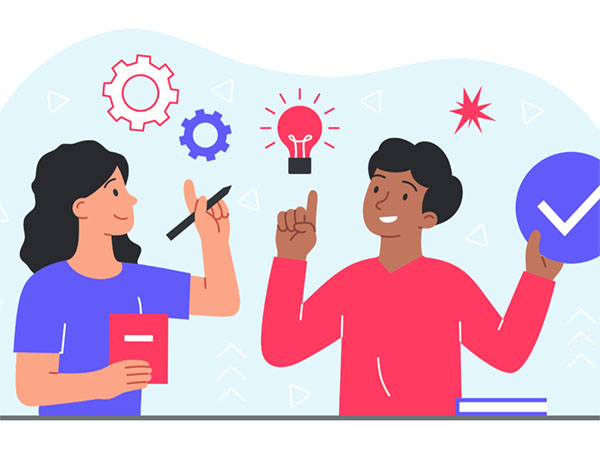
Two people talking with lightbulb and gear icons around them representing creativity and problem solving.
© Rudzhan/stock.adobe.com
The Reflective Thinking and Global Connections strategy supports students in developing as reflective learners who can examine their personal experiences and relate them to global issues. Through guided analysis, collaborative discussion, and structured reflection, students evaluate information, consider diverse perspectives, and make meaningful personal connections. This process strengthens students’ self-awareness, communication, and global mindedness in alignment with International Baccalaureate learner traits.
Curved arrows forming square in orange on white background

Procedure

Prepare for the Activity: Choose a current news topic aligned with your unit and learning goals (e.g., artificial intelligence, global health, habitat loss). Prepare two related print sources from Britannica School In the News! or another news source approved for classroom use. Review the Reflective Thinking and Global Connections graphic organizer ahead of time, and choose a short excerpt from another article that clearly presents a claim. You will use this excerpt to model how students should identify evidence that supports an article’s claim.
1
Preview the lesson objective by explaining that students will practice reflective thinking as they explore a real-world issue and connect it to their own experiences. Ask: “What does being a reflective thinker in today’s world mean to you?”
2
Introduce the current news topic, and lead a whole-class brainstorming session. Have students share what they already know about the topic and what they want to learn. Model neutral examples such as the following:
What I know: “I know this issue affects people in different parts of the world.”
What I want to learn: “Why is this issue important, and who does it impact?”
3
Display the Reflective Thinking and Global Connections graphic organizer, and model how to complete the first two rows of the K-W-L + My Personal Connections chart in Part 1 (rows K and W). Think aloud as you record one idea you know and one question you have (something you want to learn), so that students understand the level of detail expected.
4
Pair students, and distribute a copy of the graphic organizer to each student. Ask students to write the topic at the top of the organizer. Then invite students to work with their partners to complete the first two rows of the chart in Part 1 by recording prior knowledge and questions.
5
When students have completed the first two rows, explain that they will now read an article on the topic and use the graphic organizer to record what they learned and their personal connections. Clarify that they will also practice identifying evidence in the article, but they will not record that evidence in the chart. Briefly model how to identify evidence in a short excerpt of an article by underlining or highlighting phrases that support a claim, or by annotating in the margin of the text. Explain what counts as evidence so that students know what to look for.
6
Model how to complete the last two rows of the chart in Part 1 (rows L and P). For the L row, show students how to note new information from an article (e.g., “I learned new information about the causes of this issue. One cause is…”). For the P row, demonstrate how students might relate the topic to their own experiences or observations (e.g., “I have seen a similar issue in my community or in the news. The issue…”).
7
Provide each student with a preselected article from Britannica School In the News! Before students complete the organizer, remind them briefly that authors use evidence to support their claims. This step helps students understand an article’s structure, even though the organizer itself focuses on their learning and personal connections.
8
Students should fill in the article title in Part 1 of the graphic organizer and then read the article. They will then complete the L and P rows of the chart in Part 1 by recording new learning and personal connections.
9
As students read, remind them to notice evidence that strengthens the article’s claims, even though they will not write this evidence in the organizer. They can follow the approach that you modeled in step 5, for example, by underlining, highlighting, or annotating in the margin of the text. Encourage students to note any differing perspectives as they read. To help students manage their work, provide a suggested time frame of 15–20 minutes.
10
Bring the class together, and form groups of four to six students by joining two or three pairs. Guide students in a reflective discussion about their new learning and connections. Share two or three guiding prompts to support structured discussion, such as the following:
“What idea challenged your thinking?”
“What evidence in the article did you find interesting or convincing?”
“What personal connections stood out to you?”
Encourage students to take turns and refer back to the graphic organizer as they talk. Ask for volunteers to identify insights that emerged across groups.
11
Explain that students will now complete Part 2 of the graphic organizer independently, using an article related to the topic of the first article. They will summarize the article, brainstorm personal connections using the word web, and write a paragraph or two explaining those connections.
12
Clarify expectations for the summary by modeling how to write one concise, evidence-supported sentence, and then explain that students will include similar sentences in their full summary. Consider modeling how to use the word web for brainstorming personal connections.
13
Distribute a printed copy of the second article selected from Britannica School In the News! Students should fill in the article title in Part 2 of the graphic organizer, read the article, and then complete the rest of Part 2.
14
After students complete their independent work, have them share with a nearby partner. To strengthen reflective thinking, encourage partners to offer one question and one compliment about each other’s work.
15
Lead a class discussion to activate students’ thinking about how the two news articles they read are connected. Instruct students to complete Part 3 of the graphic organizer independently, writing a reflection explaining the connections between the articles used in Parts 1 and 2.
16
Wrap up by asking students to evaluate how personal experiences shape their perspectives on global issues. Emphasize that reflective thinking and consideration of multiple viewpoints support their growth as informed and open-minded learners.
17
End with one whole-class reflective prompt, such as “How did your thinking grow today?” This prompt helps students internalize the value of reflection and global awareness.
Expanding arrows icon in white on purple background

Differentiation

Strategic Grouping: Pair or group students intentionally to support productive discussion, identification of key ideas, and deeper personal connections.
Actionable Solutions: Encourage students to first identify a challenge within an article of their choosing and then brainstorm realistic actions that individuals or communities could take. This builds reflective and proactive thinking.

Multilingual Learning Support

Beginning Proficiency: Pre-teach essential vocabulary with visuals and a bilingual word bank. Offer audio versions of the articles, and ask guiding questions to strengthen comprehension and pronunciation. Pair students with peers who share their home languages.
Intermediate Proficiency: Provide sentence starters for reflective dialogue (e.g., “I believe this because…” and “My connection to this topic is…”) along with frames for completing the K-W-L + Personal Connections chart.
Advanced Proficiency: Allow students to access a bilingual dictionary to support understanding of complex vocabulary. Encourage students to share personal examples and stories to deepen their reflective connections.
Overlapping documents icon in light blue on white background

Variations

Student Article Selection: Allow students to use the Britannica School In the News! library to choose their own articles on the selected current news topic. Then have them complete the graphic organizer using their chosen articles.
Community Connections: After students complete Part 1 of the graphic organizer using the preselected topic and article, invite them to select a related issue within their own community and choose their own article on that issue. They will use that article as they complete Parts 2 and 3, to strengthen local to global thinking.
© Encyclopædia Britannica, Inc. All rights reserved.