


Lesson MINI

Britannica School logo in navy blue and green text

LESSON MINI

Patterns in the Past: Fossils and Evolution

Grade:

6-8

Topic:

Fossils and Evolution

Unit:

Dinosaur Evolution
Eye icon in white on red background

Overview

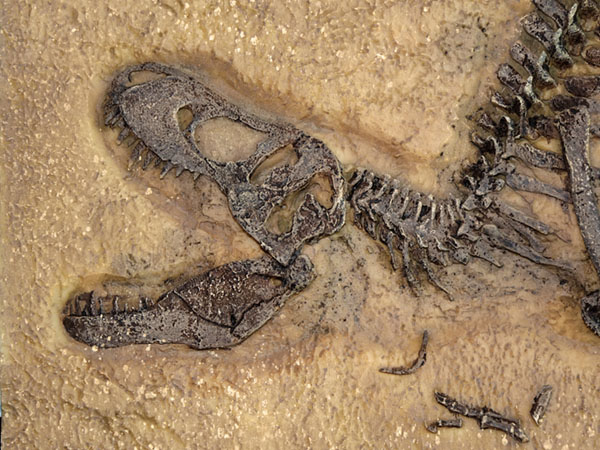
Fossilized dinosaur skeleton embedded in rock, showing skull, jaw, and partial spine

In this lesson mini, students explore fossil evidence, dinosaur characteristics, and anatomical similarities between dinosaurs and birds to understand patterns of evolution. They examine the field of paleontology and how the study of fossils can provide clues about dinosaur traits, behavior, and changes over time. Through collaborative readings, video viewings, group discussions, and hands-on analysis tasks, students will develop evidence-based explanations about natural selection, evolutionary relationships, and dinosaur extinction.

Ideas for Implementation
Science
Literacy
Library media
Learning centers
Intervention or enrichment
Key Vocabulary & Definitions
anatomy (noun): the study of the structure of living things
evolution (noun): the process by which changes in plants and animals happen over time
extinction (noun): the complete disappearance or dying out of a species, where no members of that group remain alive
fossils (noun): the remains or traces of plants and animals that lived long ago; they give scientists clues about the past
hereditary (adjective): passed or able to be passed from parent to offspring before birth
locomotion (noun): the act or power of moving from place to place
natural selection (noun): the scientific process in which organisms with traits better suited to their environment are more likely to survive and reproduce over generations
permineralization (noun): the process of fossilization in which mineral deposits (such as silica or calcium carbonate) fill the internal pores, cavities, or spaces within organic tissues (like bones, shells, or wood)
quadruped (noun): an animal that has four feet
Authentic Learning Extensions
Authentic learning opportunities for studying dinosaurs involve real-world experiences and practical applications that help students understand the field of paleontology, dinosaur characteristics, and evolution in a meaningful way. Here are some examples:
Fossil Investigation Simulation: Students act as paleontologists by examining replica fossils or images of real fossils. Have students record observations, identify possible organisms, and infer the environment in which the organism lived. Require students to support their conclusions with evidence and explain how fossils provide information about past life and extinction. This activity mirrors real scientific investigation and evidence-based reasoning.
Local Fossil Research Project: Students research fossils or prehistoric life found in their region or state. Have students investigate what types of organisms lived there and what the environment may have been like. Require students to connect their findings to geologic time periods, fossil evidence, and environmental changes. Have students present their findings through a report or presentation, connecting classroom learning to real-world locations.
Museum Exhibit Design: Students design a mini museum exhibit about dinosaurs, fossils, or extinction theories. Have students include labeled visuals, timelines, and written explanations. Require students to present evidence-based claims about evolution, survival traits, or extinction using information from credible sources. Have students present their exhibits to classmates or a broader audience, simulating real museum work.

Choose Activity

4
Patterns in the Past: Fossils and Evolution

Activity

1 :

Fossil Evidence and Dinosaur Time Periods

By the end of the activity, students will use fossil evidence and informational texts to describe how fossils form and identify patterns in when dinosaurs lived across the Triassic, Jurassic, and Cretaceous periods.

>40

Minutes

Materials

Digital devices such as Chromebooks or tablets (one per student)
Tape
Whiteboard and display
Writing utensils

Resources

1
Tell students that during today’s activity they will examine different types of fossil evidence to learn how fossils form and to identify patterns in when dinosaurs lived during different time periods.
2
Begin by displaying a Dinosaur: Fossil Tracks image showcasing prehistoric dinosaur tracks found in Arizona. Invite students to describe what they notice and ask, “What are fossils, and how do you think they form?” As students share, record their ideas on the board.
3
Display the Fossil article, and have students access it using a digital device. Instruct students to read the “Introduction” and “How Fossils Form” sections, and give a copy of the Note-Taking graphic organizer to each student. Tell students to summarize the text’s key words, key facts, and main ideas independently. To clarify expectations, model at least one example before students begin. For example:
Key Word: fossil
Key Fact: The most common fossils come from hard tissues, such as shells or bones.
Main Idea: Fossils form mostly from hard tissues, so fossils from soft tissues are rare.
4
After students finish, ask them to exchange their findings with a nearby peer. Then bring the class back together, and call on volunteers to share something new they learned from the reading and the pair-share.
5
Display the Dinosaur Egg Fossils image, and invite students to describe what evidence the image provides. Students might answer, “Dinosaurs reproduced from eggs.” Ask students:
How do you think fossils help scientists learn about dinosaurs?
What are some challenges paleontologists might encounter when examining fossils?
6
Display the Dinosaur article, and invite students to read the “Introduction,” “When Dinosaurs Lived,” and “The World of the Dinosaurs” sections with a partner on a shared digital device. Distribute one Paleontology: The Study of Dinosaurs handout per pair, and instruct students to answer the questions in Part 1 of the handout as they read.
7
Invite student pairs to complete the timeline in Part 2 of the handout by labeling the approximate time ranges for the Triassic, Jurassic, and Cretaceous periods. Have students access the “Dinosaurs by Time Period” section of the Dinosaurs at a Glance article and write the names of at least two dinosaurs that lived during each geologic period on the timeline. Provide or model a simple example timeline to support understanding before students begin.
8
Wrap up the activity by asking students to share one new fact they learned about fossils and dinosaurs.
Language Support: Offer students the opportunity to read the assigned article sections both in English and in their home languages before class. Pre-teach important vocabulary words and concepts, such as geologic period, fossils, paleontology, and Mesozoic Era. Offer students a word bank with sentence starters to use during the note-taking task and partner task.
Independent Reading: Support students in understanding key information about fossils by displaying the Britannica Library How Fossils Form video before the independent reading task. Set a purpose for viewing by asking comprehension questions to support students in building their background knowledge on what fossils are and how they form. This approach deepens students’ understanding.
Fossil Sites: Challenge students to analyze the Britannica Library Fossil Sites, World Map and research the types of dinosaur fossils found at the different sites. Invite students to evaluate which geologic period the dinosaurs come from. This approach supports students in applying new learning in different ways.
Hands-On Investigation: Consider having students create 3-D models of the Triassic, Jurassic, and Cretaceous geologic time periods. This approach allows students to make visual presentations of important learning using a variety of available resources, such as modeling clay, sand, and paint.
Parallel Teaching: For collaborative teaching and learning environments, this learning activity is well suited to a Parallel Teaching strategy. In this model, the class is divided into two groups, and each teacher delivers the same activity simultaneously to their group. This reduces the student-teacher ratio, allowing for more interaction and individualized attention. With smaller groups, students are more likely to participate actively and receive immediate feedback, which fosters a deeper understanding of the content and promotes a more engaging learning experience. Evidence suggests that small-group instruction leads to increased student engagement and improved academic outcomes.
Patterns in the Past: Fossils and Evolution

Activity

2:

Natural Selection and Dinosaur Traits

By the end of the activity, students will be able to evaluate dinosaur traits and explain how natural selection influenced the traits that increased survival over time.

>40

Minutes

Materials

Digital devices such as Chromebooks or tablets (one per student)
District-approved digital drawing tool
Images of dinosaurs
Sticky notes (one per student)
Whiteboard and display
Writing utensils

Resources

1
Tell students that today they will evaluate dinosaur traits and analyze how natural selection influenced which characteristics increased survival.
2
Begin by displaying images of dinosaurs from the Dinosaur article, Britannica Library, ImageQuest, or another royalty-free resource and asking students, “What are the key characteristics of dinosaurs?” and “How do you think different traits helped dinosaurs survive?”
a)
Write the questions on the board, and have students discuss the answers with a nearby partner.
b)
After a few minutes, bring the class back together and call on pairs to share their ideas.
c)
Record students’ ideas on the board as they share.
3
Define natural selection as “the scientific process in which organisms with traits better suited to their environment are more likely to survive and reproduce over generations.” Then ask, “Which specific characteristics help different animals survive?” Model an example: “The color green helps to camouflage lizards that live in trees.”
4
Display the Dinosaur article, and have students access it using a digital device. Instruct students to read the “Dinosaur Characteristics” section independently. Preview that this section will discuss dinosaurs’ color, diet and feeding behavior, locomotion, reproduction, defense, intelligence, circulation, and body temperature.
5
Before students start reading, give each student a Dinosaur Characteristics and Natural Selection handout, and have them complete Part 1. Then have them review and compare their answers with a nearby partner.
6
Explain to students that during the Age of Dinosaurs many species survived while others disappeared and that eventually all dinosaurs became extinct at the end of the Cretaceous period. Clarify that scientists use fossil evidence to study these patterns over time. Challenge students to think about which dinosaur characteristics might have helped dinosaurs survive from one generation to the next. For example, say: “T. rex’s sharp teeth helped it catch its prey, while the long neck of the Brachiosaurus helped it reach food on top of trees.” Ask students:
How would these traits help these dinosaur species reproduce?
Which traits are more likely to be inherited?
7
Combine student pairs into groups of four, and invite groups to discuss how different dinosaurs mentioned in the article survived. Have students choose three dinosaurs from the article and complete Part 2 of the handout together.
8
Challenge each student group to choose one dinosaur from Part 2 of the handout to draw using a district-approved digital drawing tool. Then have students write a brief explanation of how natural selection helped this species survive. Instruct students to mention at least two traits and provide evidence from the text in their explanations. After students finish, call each group to present their drawing and explanation.
9
Wrap up the activity by giving one sticky note to each student and drawing a large dinosaur egg on the board. Ask students to write on their sticky note how one specific trait helped a dinosaur species survive. Then invite them to add their sticky notes to the board. Close the activity by reading aloud a few of the notes.
Language Support: For students who benefit from additional language support, pre-teach key vocabulary supported by visual aids (e.g., natural selection, locomotion, quadruped) and offer students the opportunity to read and take notes on the assigned article section before class. Then pair multilingual learners with bilingual peers or native English speakers for the partner and group tasks. Offer sentence starters to support students in expressing their ideas regarding dinosaur traits and survival.
Dinosaur Assignments: Assign each group to focus on one specific dinosaur instead of three. Ensure that the assigned dinosaur has an article on Britannica Library (e.g., Compsognathus, Psittacosaurus, and Euoplocephalus). This approach keeps the research portion focused and provides students with an opportunity to expand their knowledge on a specific dinosaur species.
Natural Selection Essay: Challenge students to research one dinosaur species and write a five-paragraph essay outlining the dinosaur’s characteristics and how natural selection influenced its survival. This approach challenges students to think critically about natural selection, further their knowledge, and build independent writing skills.
Drawing: Instead of having students use digital drawing tools, challenge them to draw their dinosaur on a large poster board. This approach challenges students to participate in collaborative, hands-on creative projects.
One Teaching, One Observing: For collaborative teaching and learning environments, this learning activity is well suited to a One Teaching, One Observing strategy. In this model, one teacher provides direct instruction to the entire class while the other observes student behavior and engagement to gather evidence of learning. This approach allows for detailed observation and assessment, helping identify students who need additional support or intervention. By focusing on student responses and participation, the observing teacher can ensure that the learning needs of all students are addressed in the activity. Research shows that targeted observation can lead to more effective intervention strategies, improving student performance.
Activity Introduction: Teacher A activates students’ background knowledge by leading an image analysis and facilitating a partner and whole-class discussion about dinosaur traits and natural selection. Teacher B observes how students engage in the whole-group discussion.
Article Reading: Teacher A displays the Dinosaur article and has students access the “Characteristics” section using a shared personal digital device. Teacher B circulates the room and observes student engagement.
Partner Task: Teacher A gives each student a Dinosaur Characteristics and Natural Selection handout and has them complete Part 1 with an assigned partner. Teacher B circulates the room and observes how students complete the assigned task.
Group Work: Teacher A combines student pairs into groups of four and has them discuss how different dinosaurs survived. After a few minutes, Teacher A instructs students to complete Part 2 of the handout. Teacher B circulates the room and observes how students complete the assigned task.
Preparation and Presentation: Teacher A challenges each group to choose one dinosaur, draw it using a digital tool, and then write a brief explanation of how natural selection helped this species survive. Teacher B circulates the room and observes how students collaborate and apply their knowledge to complete the task. After students finish, Teacher A calls each group to present their drawing and explanations, and Teacher B assesses students’ performance.
Final Reflection: Teacher A wraps up the lesson by asking students to reflect on their new learning. Teacher B observes how students respond.
Patterns in the Past: Fossils and Evolution

Activity

3:

Anatomy Evidence: Dinosaurs and Birds

By the end of the activity, students will be able to explain how anatomical similarities among dinosaurs and birds support scientific explanations of evolutionary relationships.

>40

Minutes

1
Tell students that today they will analyze the scientific evidence used to explain evolutionary connections and anatomical similarities between birds and dinosaurs.
2
Begin by asking students, “What are the key characteristics of birds?” Students might share that birds have feathers and lay eggs. Then ask, “What do you think dinosaurs and birds have in common?” Model one connection, such as “They lay eggs” or “Many theropods had beaks similar to birds.”
3
Display the Lesothosaurus image, and have students describe what they notice. Challenge them to reflect on how a chicken and a Lesothosaurus are similar and different.
4
Display the Feathered Dinosaur video, and give each student a Dinosaur and Bird Anatomy handout. Before playing the video, set a purpose for viewing by asking students to make connections between dinosaur and bird anatomy. Tell students that they should answer the questions in Part 1 of the handout after watching the video. After they finish, discuss the video’s key ideas with students.
5
Display the Dinosaur article, and have students access it using a digital device. Instruct students to read the sections “The Earliest Dinosaurs,” “The Saurischia—Lizard-Hipped Dinosaurs,” “The Ornithischia—Bird-Hipped Dinosaurs,” and “Dinosaurs and Birds.” Then ask students to answer the questions in Part 2 of the Dinosaur and Bird Anatomy handout with an assigned partner. After students finish, review the answers as a class.
6
Instruct students to continue working with the same partner to complete the Venn diagram in Part 3 of the Dinosaur and Bird Anatomy handout, highlighting the characteristics of dinosaurs and birds and using evidence from the text to identify anatomical similarities. Instruct students to label the circles “Dinosaurs” and “Birds.” After a set time, bring the class back together and record students’ ideas on a large Venn diagram on the board. Encourage students to revise and add to their diagrams as necessary. Guide students to evaluate the similarities that scientists use as evidence to support evolutionary connections.
7
Give each student a copy of the #KeyIdeas handout, and have students write three hashtags reflective of their learning for this activity (e.g., #DinosaursHadFeathers). Then have students draw a visual representation of one of their hashtags.
8
After students finish, wrap up the activity by bringing the class together and identifying common themes in student responses on the #KeyIdeas handout.
Language Support: For students who benefit from additional language support, pre-teach key vocabulary supported by visual aids (e.g., extinction, Saurischia, Ornithischia, evolutionary relationship, anatomy) and offer students the opportunity to read and take notes on the assigned sections before class. Then pair multilingual learners with bilingual peers or native English speakers for collaborative support.
Venn Diagram: Provide an adapted Venn diagram with sentence starters and a word bank of linking words to support students in comparing and contrasting dinosaurs and birds effectively. This approach helps students stay focused and supports them in expanding their vocabulary.
Evolutionary Relationship: Divide the class into groups of four or five students. Have students work collaboratively using a digital tool to write a paragraph outlining the evolutionary relationship between dinosaurs and birds. Direct students to include a claim, three supporting statements from the article, and an analysis. This approach challenges students to synthesize key ideas from the reading and Venn diagram and organize them into a paragraph format.
Active Reading: Instead of using the Dinosaur and Bird Anatomy handout, have students use the Active Reading Through Writing graphic organizer to apply strategies before, during, and after reading to aid in comprehension. This approach supports students in building independent reading skills.
Team Teaching: For collaborative teaching and learning environments, this learning activity is well suited to a Team Teaching strategy. In this model, sometimes referred to as “tag team teaching,” both teachers deliver instruction together, often alternating or integrating their teaching styles seamlessly. This collaborative approach provides students with multiple perspectives and teaching styles, enriching their learning experience. By modeling effective teamwork and communication, this approach demonstrates how different viewpoints can enhance understanding and create a dynamic and interactive classroom environment. Evidence indicates that team teaching can enhance student engagement and provide a richer, more diverse educational experience.
Activity Introduction: Teacher A introduces the concept of evolutionary connections and anatomical similarities between dinosaurs and birds. Teacher B facilitates a discussion about the characteristics dinosaurs and birds have in common and a comparative image analysis.
Video: Teacher A displays the Feathered Dinosaur video and sets a purpose for viewing. Teacher B distributes the Dinosaur and Bird Anatomy handout to students before the video and directs them to answer the questions in Part 1 of the handout. After the video, both teachers lead a discussion on the key ideas presented.
Article Reading: Teacher A displays the Dinosaur article and has students access it using their digital devices. Teacher B instructs students to read the sections “The Earliest Dinosaurs,” “The Saurischia—Lizard-Hipped Dinosaurs,” “The Ornithischia—Bird-Hipped Dinosaurs,” and “Dinosaurs and Birds” and then answer the questions in Part 2 of the handout. After students finish, both teachers review the answers with the class.
Venn Diagram: Teacher A instructs students to complete a Venn diagram highlighting the characteristics of dinosaurs and birds and using evidence from the text to identify anatomical similarities. Teacher B brings the class back together and records students’ ideas on a large Venn diagram.
Activity Wrap-Up: Teacher A distributes a #KeyIdeas handout to evaluate students’ learning. Teacher B facilitates a closing discussion and identifies trending themes and topics.
Patterns in the Past: Fossils and Evolution

Activity

4:

Dinosaur Extinction Theories and Evidence

By the end of the activity, students will be able to compare and contrast major dinosaur extinction theories and evaluate their plausibility using an evidence-based approach supported by scientific reasoning.

>40

Minutes

1
Tell students that today they will analyze different theories explaining why dinosaurs became extinct.
2
Review the definition of extinction as “the complete disappearance or dying out of a species, where no members of that group remain alive.” Then activate students’ thinking and ask, “Why did dinosaurs become extinct?” Record students’ ideas on the board as they share. Afterward, share that there are a number of scientific theories to explain the extinction of dinosaurs.
3
Display the Extinction of the Dinosaurs video, and give each student a Dinosaur Extinction Theories and Evidence handout. To set a purpose for viewing, review the questions in Part 1 of the handout with students before playing the video. After the video, discuss the questions with the class.
4
Divide students into pairs, and invite them to access and read the “Extinction of the Dinosaurs” section of the Dinosaur article using a digital device. As students read, have them complete Part 2 of the handout.
5
Combine student pairs into groups of four, and have them discuss within their groups the pros and cons of the two extinction theories highlighted in the article (gradual extinction and asteroid crash). Invite students to support their ideas with evidence from the text and refer to their handouts as needed.
6
After a set time, bring the class back together and call on volunteers to share interesting points of conversation.
7
Explain to students that they are going to imagine they are scientists preparing to present at an annual paleontology conference. Assign half the groups the gradual extinction theory and the other half the asteroid crash theory. Have the groups conduct external research using a district-approved search engine. Challenge students to prepare a collaborative digital presentation (using a district-approved tool) and describe their assigned theory, its supporting hypothesis, the evidence presented, its impact on dinosaurs, and a counterargument that addresses competing theories. Encourage students to refer to specific evidence from the video and the article, and from at least one additional reliable source, in their presentations.
8
Invite students to present their work to their peers. Instruct audience members to pretend they are a panel of scientists. Have them take notes as they listen to the presentation and ask questions.
9
Have students vote on the most plausible theory using a district-approved digital voting tool. Afterward, ask students to evaluate whether they think it’s possible that more than one theory contributed to the extinction of the dinosaurs.
10
Wrap up the lesson by asking students to complete a Focus Frame Feedback handout. Have them draw the most important thing they learned today and write a few sentences explaining their drawing. Afterward, have students share their work with a nearby partner. Bring the class back together, and close by asking, “Why do you think humans are so fascinated by dinosaurs and how they became extinct?”
Language Support: For students who benefit from additional language support, pre-teach key vocabulary supported by visual aids (e.g., theory, extinction, hypothesis, asteroid). Offer students the opportunity to watch the video and read the assigned text in their home languages. Pair multilingual learners with bilingual peers or native English speakers for the group work, and offer students the option of presenting in their home languages.
Presentation Slides: Offer a more structured approach to the presentation and provide students with a presentation template with title pages, guiding questions, and sentence starters on each slide. This approach supports students in completing the task effectively.
K-T Extinction Video: Challenge students to watch the Britannica Library K-T Extinction video and further evaluate how meteorites have changed the face of Earth throughout history. Instruct students to summarize the main ideas presented in the text using a Note-Taking graphic organizer.
Socratic Seminar: Instead of having students present on the extinction theories outlined in the text, consider organizing a Socratic seminar to discuss the theories. Have students use the Socratic Dialogue graphic organizer. This approach promotes critical thinking and encourages peer-to-peer interaction.
Parallel Teaching: For collaborative teaching and learning environments, this learning activity is well suited to a Parallel Teaching strategy. In this model, the class is divided into two groups, and each teacher delivers the same activity simultaneously to their group. This reduces the student-teacher ratio, allowing for more interaction and individualized attention. With smaller groups, students are more likely to participate actively and receive immediate feedback, which fosters a deeper understanding of the content and promotes a more engaging learning experience. Evidence suggests that small-group instruction leads to increased student engagement and improved academic outcomes.
Patterns in the Past: Fossils and Evolution

Activity

5:

Minutes

Materials

copy text here
copy text here

Resources

Prepare for the Activity:
1
copy text here
2
copy text here
3
copy text here
a)
copy text here
TEXT BLOCK: Lorem ipsum dolor sit amet, consectetur adipiscing elit, sed do eiusmod tempor incididunt ut labore et dolore magna aliqua. Ut enim ad minim veniam,
Lorem ipsum dolor sit amet, consectetur adipiscing elit, sed do eiusmod tempor incididunt ut labore et dolore magna aliqua. Ut enim ad minim veniam, quis nostrud exercitation ullamco laboris nisi ut aliquip ex ea commodo consequat. Duis aute irure dolor in reprehenderit in voluptate velit esse cillum .
copy text here
copy text here
Lorem ipsum dolor sit amet, consectetur adipiscing elit, sed do eiusmod tempor incididunt ut labore et dolore magna aliqua. Ut enim ad minim veniam, quis nostrud exercitation ullamco laboris nisi ut aliquip ex ea commodo consequat. Duis aute irure dolor in reprehenderit in voluptate velit esse cillum .
copy text here
copy text here
copy text here
© Encyclopædia Britannica, Inc. All rights reserved.
