
Lesson MINI

Britannica School logo in navy blue and green text

LESSON MINI

All About Flags and Flag Day

Grade:

K-2

Topic:

Flag Day

Unit:

Celebrating Flag Day
Eye icon in white on red background

Overview

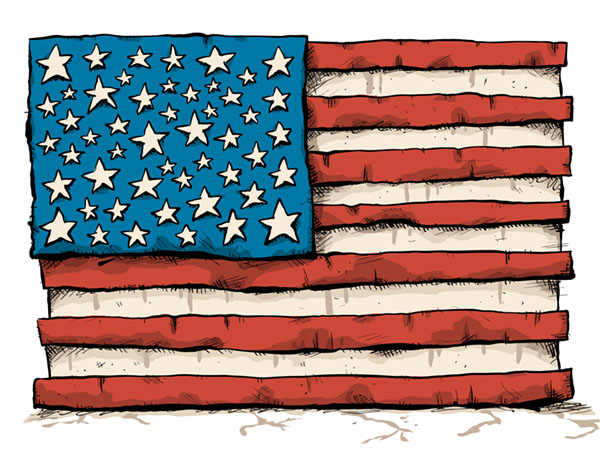
An illustration of the American flag in a loose, sketchy artistic style.
© blambca/stock.adobe.com

In this lesson mini, students explore what flags represent and why they are important, the origins of the US flag and its design, and the significance of Flag Day. Through guided readings, creative art projects, and games, students learn about Flag Day and discover what different flags symbolize.

Ideas for Implementation
Social studies
Literacy
Library media
Learning centers
Intervention or enrichment
Key Vocabulary & Definitions
country (noun): the land of a person’s birth, residence, or citizenship
freedom (noun): being able to make choices freely
goodness (noun): being kind and doing the right thing
justice (noun): being fair and treating everyone the right way
pureness (noun): telling the truth and doing what is right
symbol (noun): something that stands for something else
Authentic Learning Extensions
Authentic learning opportunities for studying Flag Day involve real-world experiences and practical applications that help students understand the importance of American history in a meaningful way. Here are some examples:
Arts and Crafts Project: Encourage students to represent the US flag through a creative arts and crafts project. Offer students the option to cut and tear pieces of colored paper to make a flag collage, build the flag with colored clay, or create paintings and original 3-D representations of the flag.
Collaborative Mural: Create a classroom mural of the US flag as well as world flags to represent the US and the wider world. This approach fosters teamwork and builds students’ global awareness.
Flag Scavenger Hunt: Invite students to participate in a scavenger hunt and find the US flag in different places such as at school, in a local library, in their homes, or on a playground. This helps students connect classroom learning to their community.

Choose Activity

3
All About Flags and Flag Day

Activity

1 :

Creating and Understanding Flags

By the end of the activity, students will be able to explain what flags represent and create their own classroom flags.

30-40

Minutes

Materials

Coloring supplies (colored pencils, crayons, and/or markers)
Decorative materials (e.g., glitter, glue, stickers, and tissue paper)
Digital design tool
Sticky notes (two per student)
White construction paper (one sheet per student)
Whiteboard and display
Writing utensils

Resources

1
Tell students that today they will learn about what flags represent.
2
Begin by displaying the Countries’ Flags image and asking students:
What do you notice about the flags?
What colors, shapes, and symbols are on the flags? (Explain that a symbol can be a picture that stands for something else, like a smiley face that is used to show a feeling of happiness.)
3
Display the Flag article, and explain to students that they will learn about the US flag, other countries’ flags, and how flags can represent, or stand for, ideas, places, or groups of people. Give each student a copy of the Flag article, and ask them to skim the article and circle the word flag wherever they find it. After a few minutes, ask students to share their work with a partner.
4
Read the Flag article aloud to the class, asking students to follow along. Emphasize the sentence that reads: “A flag stands for something.” Pause for comprehension checks after each section using the following guiding questions:
What is a flag?
What do flags usually have?
What does the US flag look like?
When a flag is flown halfway up a pole, what does it mean?
What kinds of messages do different flags symbolize, or stand for?
5
Explain to students that they will create a unique flag to represent their classroom. Instruct them to think about which colors, shapes, and symbols they would like to include on their flags.
a)
Model an example by displaying the Sample Classroom Flag.
b)
Distribute coloring supplies, white construction paper, and decorative materials (e.g., glitter, glue, stickers, and tissue paper), and have students work on their flags independently.
c)
Divide the class into groups of four, and invite students to share their flags with their group members. Write the following questions on the board to guide group discussions: “What does your flag mean?” and “Why did you choose the colors, shapes, and symbols that you used?”
6
Bring the class back together, and invite volunteers to share their flags with the whole class and explain their meanings.
7
Display the students’ flags around the classroom, and conduct a gallery walk so that students can look at each other’s work. Give each student two sticky notes so that they can draw or write positive feedback for a few flags. For example, they can draw a simple smiley face or complete the sentence “I like…” to share their thoughts.
8
Facilitate a classroom brainstorm, and design a flag as a whole group. Have students share their ideas, and use a digital design tool to create the flag.
9
Wrap up the lesson by asking students, “What are flags, and why are they important?”
Language Support: Pre-teach key vocabulary words from the article (e.g., flag, halfway, message, symbol) using simple definitions and visual aids to ensure students comprehend the article’s main ideas. Provide sentence frames to guide group discussions (e.g., “My flag means…” or “These colors stand for…”).
Break It Down: Chunk the article reading, and preview a set of guiding questions to enhance reading comprehension. If necessary, shorten the read-aloud to adapt to your students’ levels and attention spans. These approaches help students internalize new learning.
Flag Creation: Challenge students to choose a specific country and draw that country’s flag using a template. Invite them to work with an adult to research what the flag looks like and what it means. This approach helps students build their research skills and make text-to-world connections.
Parallel Teaching: For collaborative teaching and learning environments, this learning activity is well suited to a Parallel Teaching strategy. In this model, the class is divided into two groups, and each teacher delivers the same activity simultaneously to their group. This reduces the student-teacher ratio, allowing for more interaction and individualized attention. With smaller groups, students are more likely to participate actively and receive immediate feedback, which fosters a deeper understanding of the content and promotes a more engaging learning experience. Evidence suggests that small-group instruction leads to increased student engagement and improved academic outcomes.
All About Flags and Flag Day

Activity

2:

Exploring the US Flag

By the end of the activity, students will be able to describe the US flag and the meaning of its elements.

>40

Minutes

1
Tell students that today they will learn about the US flag and where we can find it.
2
Begin by reviewing what students already know about flags. Ask: “What are flags, and what are they used for?”
3
Display the United States Flag article, and give a copy to each student. Invite students to complete a word hunt to practice key vocabulary. Write the following words on the board or a temporary word wall: flag, stars, stripes, symbol, country. Have students skim the article and circle these words. After students finish, call on volunteers to use these words in a sentence. Model an example to set expectations: “The US flag has stars and stripes.”
4
Ask students yes/no questions that activate prior knowledge, such as the following:
Have you seen a US flag at school?
Do you have a flag at home? (Emphasize that it can be from any country.)
Does the US flag have the color red?
Does the US flag have 100 stars?
To incorporate movement into the activity, have students stand up if the answer is yes and remain seated if the answer is no. Be sure to provide the correct answers to any questions related to details about the US flag.
5
Read aloud the article, or call on volunteers to read. Pause throughout to check comprehension by asking the following guiding questions:
What does the US flag look like?
What do the stars and stripes symbolize, or stand for?
Where are flags found?
6
Give each student a United States Flag Questions handout, and ask them to work with a partner to answer the fill-in-the-blank questions. Display the handout, and review the task to ensure students understand the instructions. After students finish, review the answers. (Answers: 1. rectangle; 2. symbol; 3. 13; 4. 50; 5. blue.)
7
Give each student a United States Flag template and coloring supplies. (Note: An alternative is to provide students with red, white, and blue paint and paintbrushes.) Instruct students to color the flag using its true colors. Display the third image from the United States Flag article for support.
8
After students finish, invite students to observe their completed flags and discuss what they notice about the colors and patterns.
9
Wrap up the lesson by asking students to share their finished flags with a nearby partner and explain what their flag shows or represents. Model an example: “The US flag is important because it stands for my country.”
10
After students finish their pair-share, assemble the class and call on volunteers to think of and share one word to represent the US flag, for example, beautiful or colorful. As students share, record their ideas on the board.
Language Support: Pre-teach key vocabulary (flag, stars, stripes, symbol, country) using visual aids for support before assigning the word hunt task. Provide sentence frames to help students describe the US flag (e.g., “The flag has…” or “I see…”). Offer students the option to read the article in their home languages.
Word Hunt Support: Provide an adapted version of the article with a few of the target words already circled. This approach supports students in understanding the assignment and with task initiation.
Flag Memory Game: Prepare a memory game using different countries’ flags to expose students to a variety of flag designs and broaden their worldview through play. This activity also helps students build memory skills.
Flag Crafts: Instead of having students color a large US flag, have them color a smaller one and glue it to a craft stick. Then have students wave their flags as they listen to age-appropriate patriotic songs.
One Teaching, One Assisting: For collaborative teaching and learning environments, this learning activity is well suited to a One Teaching, One Assisting strategy. In this model, one teacher leads the activity while the other circulates, assisting individual students as needed. This ensures that when students encounter difficulties, they receive immediate help in the form of personalized support and answers to their questions. By addressing students’ unique needs and keeping them on track, this approach enhances individual learning experiences and fosters a supportive classroom environment. Studies indicate that immediate feedback and individualized attention can significantly enhance student understanding and retention of material.
Activity Introduction: The lead teacher reviews the purpose of flags while the assisting teacher circulates the room and supports students as needed.
Word Hunt: The lead teacher explains the word hunt. The assisting teacher models how to complete the task to ensure understanding and then distributes the United States Flag article. After students finish, both teachers call on volunteers to use the words in a sentence.
Flag Knowledge: The lead teacher asks students questions about flags to activate background knowledge. The assisting teacher supports students with the activity.
Article Reading and Handout: The lead teacher reads aloud the United States Flag article or calls on volunteers to read. The assisting teacher asks questions to check comprehension. The lead teacher reviews the United States Flag Questions handout while the assisting teacher gives a copy to each student. After students finish, both teachers review the answers.
Flag Craft: The lead teacher explains the flag craft while the assisting teacher gives each student a United States Flag template and the necessary coloring supplies.
Activity Wrap-Up: The lead teacher wraps up the lesson by asking students to share their finished flags with a nearby partner and explain why the US flag is important to them. The assisting teacher assembles the class and calls on volunteers to think of one word to represent the US flag.
All About Flags and Flag Day

Activity

3:

Understanding Flag Day

By the end of the activity, students will be able to explain the origins and significance of Flag Day.

>40

Minutes

1
Tell students that today they will learn how Flag Day started and why it is an important day.
2
Begin by displaying the US Flag image and asking students:
What do you notice about the US flag?
How many stars and stripes does it have, and what do they represent?
How do you think the US flag was designed?
3
Give each student a Picture Glossary handout, and introduce key words and concepts that appear in the What Is Flag Day? article. Instruct students to write the words freedom, goodness, justice, and pureness on the lines of the handout. Then, to set expectations, complete a glossary entry for the word bravery on the board and facilitate a discussion with the class about what it means to be brave. Model how to draw a simple image of bravery. Then define and discuss these words as a class before students begin drawing:
freedom (noun): being able to make choices freely
goodness (noun): being kind and doing the right thing
justice (noun): being fair and treating everyone the right way
pureness (noun): telling the truth and doing what is right
4
Display the What Is Flag Day? article, and give a copy to each student. Read the article aloud while students follow along. Pause for comprehension checks after each section using the following guiding questions:
Why is June 14 Flag Day?
What is another name for the US flag?
What do the colors represent?
What do the stars and stripes represent?
How did Flag Day start?
5
After reading the article, distribute a Sketch and Share handout and coloring supplies to each student. Ask them to work independently to draw everything they learned about Flag Day. After 5 minutes, have students turn and talk with a partner to share and explain their sketches. Then instruct them to record what they learned from their partner on the bottom of the handout.
6
Explain to students that they will now play a trivia game to test what they remember about Flag Day.
a)
Divide the class into groups of four students, and give each group one Flag Trivia Game Questions handout.
b)
Read aloud the questions on the Flag Trivia Game Answer Sheet twice, and pause after each question to allow time for students to answer.
c)
After reading all of the questions, review the answers with the class.
d)
Have students circle the questions they got right with a green marker or colored pencil and tally their final scores.
e)
Praise students for their efforts. If you want to make the game a competition, celebrate the winner(s) with the highest score.
7
Wrap up the lesson by asking students to share with a nearby partner what they learned about Flag Day. Then bring the class back together for a closing discussion. Ask the class, “Why is our flag important?” Invite a few volunteers to share their ideas with the class.
Language Support: Provide sentence frames supported with visual prompts to guide discussion (e.g., “The US flag has/is…” or “The US flag is important because…”). Provide students with the option of reading the What Is Flag Day? article in their home languages.
Build Background Knowledge: Provide visual aids and build background knowledge on how the United States became a country and the concept of Congress by sharing videos or pictures from Britannica Library, ImageQuest Jr., or another royalty-free resource. This approach enhances students’ understanding of the What Is Flag Day? article.
Compare and Contrast: Challenge students to compare and contrast the US flag with the flag of another country (e.g., Canada or Mexico) using a 2-Circle Venn Diagram graphic organizer. Review (or teach) language related to comparing and contrasting (e.g., “Both flags have…, but…”). This approach supports students in developing observation skills for comparative analysis.
One Teaching, One Observing: For collaborative teaching and learning environments, this learning activity is well suited to a One Teaching, One Observing strategy. In this model, one teacher provides direct instruction to the entire class while the other observes student behavior and engagement to gather evidence of learning. This approach allows for detailed observation and assessment, helping identify students who need additional support or intervention. By focusing on student responses and participation, the observing teacher can ensure that the learning needs of all students are addressed and met in the activity. Research shows that targeted observation can lead to more effective intervention strategies, improving student performance.
Activity Introduction: The lead teacher tells students they will learn about Flag Day and facilitates a class discussion by displaying an image of the US flag. The observing teacher notes students’ responses and engagement.
Picture Glossary: The lead teacher gives students the Picture Glossary handout and models how to complete it using the word bravery. Then the lead teacher instructs students to write the words freedom, goodness, justice, and pureness on the lines on the handout and to draw representative images. The other teacher circulates the room and observes students’ drawings.
Article Reading: The lead teacher displays the What Is Flag Day? article, gives a copy to each student, and reads it aloud, pausing for comprehension checks. The observing teacher evaluates students’ participation and notes their responses.
Sketch and Share: The lead teacher distributes a Sketch and Share handout and coloring supplies to each student and then has them work with a partner to draw everything they learned about Flag Day. The other teacher circulates the room and observes students’ sketches and explanations.
Flag Trivia: The lead teacher guides students through the Flag Trivia Game to review important learnings about flags. The other teacher observes students’ engagement.
Activity Wrap-Up: The lead teacher asks students to share what they learned about Flag Day with a nearby partner and then brings the class back together and asks, “Why is our flag important?” The observing teacher focuses on students’ participation and responses.
All About Flags and Flag Day

Activity

4:

Minutes

Materials

copy text here
copy text here

Resources

Prepare for the Activity:
1
copy text here
2
copy text here
3
copy text here
a)
copy text here
TEXT BLOCK: Lorem ipsum dolor sit amet, consectetur adipiscing elit, sed do eiusmod tempor incididunt ut labore et dolore magna aliqua. Ut enim ad minim veniam,
Lorem ipsum dolor sit amet, consectetur adipiscing elit, sed do eiusmod tempor incididunt ut labore et dolore magna aliqua. Ut enim ad minim veniam, quis nostrud exercitation ullamco laboris nisi ut aliquip ex ea commodo consequat. Duis aute irure dolor in reprehenderit in voluptate velit esse cillum .
copy text here
copy text here
Lorem ipsum dolor sit amet, consectetur adipiscing elit, sed do eiusmod tempor incididunt ut labore et dolore magna aliqua. Ut enim ad minim veniam, quis nostrud exercitation ullamco laboris nisi ut aliquip ex ea commodo consequat. Duis aute irure dolor in reprehenderit in voluptate velit esse cillum .
copy text here
copy text here
copy text here
All About Flags and Flag Day

Activity

5:

Minutes

Materials

copy text here
copy text here

Resources

Prepare for the Activity:
1
copy text here
2
copy text here
3
copy text here
a)
copy text here
TEXT BLOCK: Lorem ipsum dolor sit amet, consectetur adipiscing elit, sed do eiusmod tempor incididunt ut labore et dolore magna aliqua. Ut enim ad minim veniam,
Lorem ipsum dolor sit amet, consectetur adipiscing elit, sed do eiusmod tempor incididunt ut labore et dolore magna aliqua. Ut enim ad minim veniam, quis nostrud exercitation ullamco laboris nisi ut aliquip ex ea commodo consequat. Duis aute irure dolor in reprehenderit in voluptate velit esse cillum .
copy text here
copy text here
Lorem ipsum dolor sit amet, consectetur adipiscing elit, sed do eiusmod tempor incididunt ut labore et dolore magna aliqua. Ut enim ad minim veniam, quis nostrud exercitation ullamco laboris nisi ut aliquip ex ea commodo consequat. Duis aute irure dolor in reprehenderit in voluptate velit esse cillum .
copy text here
copy text here
copy text here
© Encyclopædia Britannica, Inc. All rights reserved.
