


Lesson MINI

Britannica School logo in navy blue and green text

LESSON MINI

Back to School Around the World

Grade:

K-2

Topic:

Schools Around the World

Unit:

Global School Experiences
Eye icon in white on red background

Overview

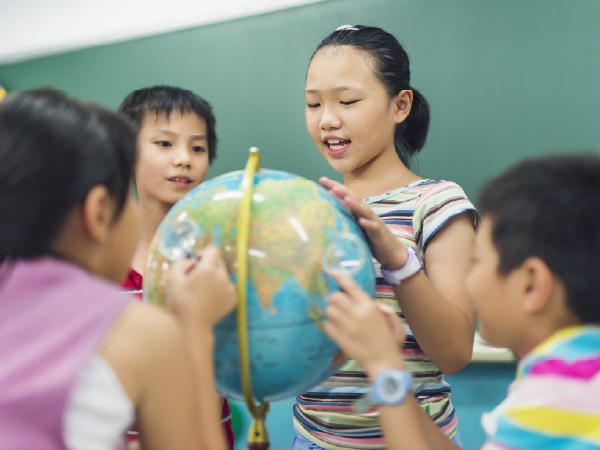
Children gathered around a globe in a classroom, pointing to different places on the map.
© Leren Lu—DigitalVision/Getty Images

In this lesson mini, students explore school life around the world by learning about back-to-school traditions, transportation, school lunches, recess games, and schools from the past and present. Through guided readings, discussions, maps, graphic organizers, and interactive activities, students compare how children in different places experience school. Students also examine how location, weather, culture, and time period can influence school experiences around the world.

Ideas for Implementation
Social studies
Literacy
Library media
Learning centers
Intervention or enrichment
Interdisciplinary collaboration
Key Vocabulary & Definitions
cable car (noun): a car that travels along a strong wire called a cable
games (noun): an activity engaged in for fun or play, often involving a contest with set rules, such as sports or board games
Indigenous people (noun): people who are the original inhabitants of a place
monsoon (noun): a seasonal weather pattern that brings heavy rain during part of the year and dry weather during another part of the year; a common season in India
recess (noun): a short scheduled break during the school day; it is a time for free play and socializing
school (noun): a place where children learn
subway (noun): an underground electric train that moves through tunnels under a city
tradition (noun): something that has been done a certain way for a long time
Authentic Learning Extensions
Authentic learning opportunities for studying schools around the world involve real-world experiences and practical applications that help students understand the importance of school traditions around the world in a meaningful way. Here are some examples:
Classroom Greetings Around the World: Teach students how children greet one another in schools in different countries. Practice simple greetings such as “hello,” “good morning,” or “thank you” in several languages. Then invite students to greet classmates using one of the greetings during morning meeting or arrival time. This activity helps students understand that children around the world communicate in different ways while building respect for languages and cultures.
Classroom Objects Around the World: Display pictures of classrooms from different countries, and ask students to identify familiar classroom objects, such as desks, books, pencils, backpacks, or whiteboards. Then invite students to compare the classrooms to their own. This activity encourages observation and helps students recognize both similarities and differences in learning environments.
Music and Movement from Schools Around the World: Teach students a simple children’s song, rhythm activity, or movement game commonly used in schools in another country. Then compare it to songs or activities students already know. This activity supports cultural awareness through active participation and play.
Read-Alouds from Around the World: Read children’s books set in schools from different countries or cultures. After reading, ask students to discuss how the school experiences in the story are similar to or different from their own school experiences. This activity builds global awareness through age-appropriate storytelling and discussion.
School Day Comparisons: Show students simple visuals of school schedules from different countries, such as lunchtime, recess, transportation, or classroom setup. Then have students compare those routines to their own school day using a class chart or drawings. This activity helps students make real-world connections between their daily experiences and the experiences of children in other places.

Choose Activity

5
Back to School Around the World

Activity

1:

Back to School Around the World

By the end of the activity, students will be able to describe how students around the world go back to school and explain how weather and location can affect when school begins.

30-40

Minutes

1
Tell students that today they will learn about back to school around the world.
2
Begin by displaying a few images of students going back to school from a royalty-free resource. Ask students to describe what they notice about each picture. Then ask:
When is the first day of school where you live?
What’s the weather usually like on the first day of school?
Do you have any back-to-school traditions?
Explain that a tradition is “something that has been done a certain way for a long time.”
3
Show a globe or map of the world, and explain that the world is divided into two halves called hemispheres; point to the Northern and Southern Hemisphere. Explain that the hemispheres have opposite seasons, meaning when it’s summer in the Northern Hemisphere, it is winter in the Southern Hemisphere. Share an example: “In August, it’s summer in the United States, but it is winter in Brazil. Because the climate is different, school may start at a different time of the year. In the United States, school starts in August or September. In Brazil, school starts in February or March.” Point to the United States and Brazil on a map or globe.
Note: Academic years in different parts of the world might be different.
4
Share with students that they will read an article about back to school traditions around the world. Then teach a few vocabulary words that will appear in the article to enhance students’ understanding. For example:
monsoon: a seasonal weather pattern that brings heavy rain during part of the year and dry weather during another part of the year; it is a common season in India
Indigenous people: people who are the original inhabitants of a place
subway: an underground electric train that moves through tunnels under a city
5
Display the Back to School Around the World article, and read it aloud. Ask students to follow along as you read, and pause after each section to ask comprehension questions:
Is the first day of school the same everywhere?
When does school start in the Northern Hemisphere? How about the Southern Hemisphere?
Which countries mentioned in the article don’t have a summer break, and what do they have instead?
What are some interesting back to school traditions?
How do children get to school around the world?
6
Give each student a set of colored pencils and a World Map with the names of the countries mentioned in the article filled in already. Display the World Map, and guide students to locate the country and color it in a specific assigned color found in the map key—for example, Uganda (blue), India (red), New Zealand (orange), Netherlands (yellow), Cambodia (pink), Venezuela (green), and Namibia (purple).
7
After the coloring task, have students draw a horizontal line to divide the Northern and Southern hemispheres. Model this, and have students copy.
8
Tell students that they will work with a partner to complete a Back to School Around the World Vocabulary and Trivia handout. Explain that they will complete a vocabulary match-up followed by a multiple choice exercise. Model an example to ensure students understand the task. Bring the class back together and review students’ responses.
9
Wrap up the activity by asking students the following review questions:
How is back to school celebrated around the world?
Why does the start of the school year change in the Northern and Southern hemispheres?
Why is going to school important?
Language Support: Model how to locate each country on the world map, and support the coloring instructions by pointing to the assigned colored pencil to ensure student understanding. Provide an adapted Back to School Around the World Vocabulary and Trivia handout supported by visuals aids. Provide sentence frames for group discussion, such as “Back to school is celebrated by…” or “The school year begins at different times because….”
Adapted World Map Task Grouping: Have students complete the World Map task in a teacher-led small group to ensure students are locating each country accurately and can distinguish the Northern and Southern hemispheres clearly. Then guide students to make simple inferences about how geography and climate affect school start dates. This approach supports spatial awareness and builds early inference skills.
Mini Book: Have students create a mini book that represents different back-to-school traditions mentioned in the article and in their home country. Encourage students to draw and label their pictures and write simple sentences to describe their work. This approach helps students synthesize information from the text and make text-to-self connections.
Class Trivia: Instead of having students complete a partner vocabulary and trivia handout, facilitate a collaborative class trivia activity to review key concepts from the article. Have students work in table groups and respond by raising their hands. Focus on teamwork rather than on competition. This approach promotes collaboration and reinforces reading comprehension.
Parallel Teaching: For collaborative teaching and learning environments, this learning activity is well suited to a Parallel Teaching strategy. In this model, the class is divided into two groups, and each teacher delivers the same activity simultaneously to their group. This reduces the student-teacher ratio, allowing for more interaction and individualized attention. With smaller groups, students are more likely to participate actively and receive immediate feedback, which fosters a deeper understanding of the content and promotes a more engaging learning experience. Evidence suggests that small-group instruction leads to increased student engagement and improved academic outcomes.
Back to School Around the World

Activity

2:

School Transportation

By the end of the activity, students will be able to identify and describe different ways children around the world travel to school.

20-30

Minutes

1
Tell students that today they will learn how children around the world get to school.
2
Begin by reviewing key vocabulary words that students will encounter in the article and interactive (e.g., subway, cable car/gondola, bicycle, donkey cart). Invite students to practice using these words in a sentence. Model an example first, such as “I ride my bicycle to work.”
3
Implement the Read-Play-Connect: Whole Class instructional strategy. Activate prior knowledge by inviting students to share what they already know about the topic.
How do children in different parts of the world get to school?
What is your favorite type of transportation?
What does New York City look like? How do you think children in New York City get to school?
How do children that live near water get to school?
4
Display the Back to School Around the World article and give a copy of the “Getting to School” section to each student. As a class, highlight the places listed in the section (e.g., New York City, Caracas, Namibia, Amsterdam, and Cambodia). Point to each place on a globe or map.
5
Have students work with a nearby peer to identify and highlight transportation words (e.g., subway, cable car, cart, bicycle, boat). After a set time, display the “Getting to School” section and call on volunteers to share their findings.
6
Read the “Getting to School” section aloud, and ask students to follow along. Demonstrate how to identify important vocabulary, highlight key details, ask questions, and make observations while reading.
7
Distribute a digital device to each student, and guide them through the accompanying Getting to School Around the World interactive as a whole class. Encourage participation by inviting students to respond to prompts, predict answers, discuss ideas with peers, and explain their thinking throughout the activity.
8
Conclude the activity with a brief reflection discussion. Invite students to either share one new fact they learned about how children get to school around the world or explain how the interactive helped them better understand the article.
Language Support: Pre-teach key transportation vocabulary words from the article (e.g., bus, car, subway, cable car/gondola, donkey cart) using simple definitions and visual aids to ensure students comprehend the article’s main ideas. Consider providing translated vocabulary support or simplified text when appropriate for multilingual learners. Pair students with supportive peers for partner activities to encourage participation.
Guided Support: Pause frequently during the article reading and interactive to explain vocabulary, model thinking, and check for understanding. Provide visual support, sentence stems, or partner discussion opportunities to scaffold comprehension and participation.
Interactive Handout Support: Provide students with the version of the supporting handout on TeachBritannica that best meets their learning needs: the circle 🔴 version, the triangle🔺 version, or the square 🟥 version. Designed to support a range of learners, these differentiated handouts help all students meaningfully engage with the content at an appropriate level of support and complexity while strengthening their understanding of the informational text and interactive experience.
Compare and Contrast: Invite students to complete a 2-Circle Venn Diagram to compare and contrast how children get to school in two different places mentioned in the article (e.g., New York City and Caracas). Invite students to draw and label their Venn diagram while identifying how the places are similar and different.
Parallel Teaching: For collaborative teaching and learning environments, this learning activity is well suited to a Parallel Teaching strategy. In this model, the class is divided into two groups, and each teacher delivers the same activity simultaneously to their group. This reduces the student-teacher ratio, allowing for more interaction and individualized attention. With smaller groups, students are more likely to participate actively and receive immediate feedback, which fosters a deeper understanding of the content and promotes a more engaging learning experience. Evidence suggests that small-group instruction leads to increased student engagement and improved academic outcomes.
Back to School Around the World

Activity

3:

School Lunches Around the World

By the end of the activity, students will be able to describe schools and compare school lunches from different countries around the world.

>40

Minutes

Prepare for the Activity: Print and cut out one set of School Lunches Around the World Match-Up Cards per group of four students.
1
Tell students that today they will learn about school and compare and contrast school lunches around the world.
2
Begin by displaying the School Building image and the In the Classroom image. Invite students to share what they notice and read the captions for each picture. Then ask:
What does your school look like?
What about your classroom?
Why do we go to school?
3
Display the Bubble Web graphic organizer, and give a copy to each student. In the center, write the word “School.” As a class, come up with words related to school (e.g., learn, desks, school bus, read, write, math), and write them on the bubble web. Ask students to copy the words onto their graphic organizer.
Note: Write words that appear in the article to scaffold the next task.
4
Display and give each student a copy of the School article. Invite students to look at the article and circle words that describe school.
5
Read the School article aloud, and invite students to follow along. Pause to check understanding at the end of each section and ask:
What is a school?
Who goes to school?
What do students learn in school?
How do they learn?
Who works at school?
6
Display the School Cafeteria image, and ask students to describe what they notice. Ask:
What are the children having for lunch?
What do you eat at school?
What’s your favorite school lunch?
7
Distribute a blank sheet of paper to each student, and have students draw their favorite school lunch. After a few minutes, invite students to share their work with a nearby peer. Bring the class back together, and call on volunteers to share their drawings.
8
Display the School Lunches Around the World images, and invite students to describe what they notice about school lunches in Cambodia, India, Namibia, Netherlands, New Zealand, Uganda, and Venezuela.
9
Divide the class into groups of four students, and give each group a set of School Lunches Around the World Match-Up Cards. Have them match the school lunch to the country. As students work, encourage them to talk about how the lunches are the same and how they are different.
10
Bring the class back together and review students’ responses. Wrap up the activity by asking volunteers to share which lunch they would like to try and why.
Language Support: Pre-teach key vocabulary words from the article (e.g., trade school, cafeteria, teacher, principal) using simple definitions and visual aids to ensure students comprehend the article’s main ideas. Consider providing an adapted version of the article in students’ home languages. Pair students with supportive peers for the group tasks to encourage participation.
Guided Word Hunt: After completing the Bubble Web graphic organizer together as class, guide students to look at the School article and identify the key vocabulary words together as a class. Model how to locate each word, and instruct students to circle each one. This approach helps students solidify new vocabulary.
Design a School Lunch Menu: Have students refer to MyPlate (or a similar food guide) and design a healthy school lunch that includes all major food groups and reflects their home country. This encourages students to apply their understanding of nutrition in a culturally relevant way.
Collaborative Trivia: As an alternative to a matching task, have students work in groups to complete a trivia activity with fill-in-the-blank and multiple-choice questions. This promotes teamwork while reinforcing key concepts from the lesson.
One Teaching, One Assisting: For collaborative teaching and learning environments, this learning activity is well suited to a One Teaching, One Assisting strategy. In this model, one teacher leads the activity while the other circulates, assisting individual students as needed. This ensures that when students encounter difficulties, they receive immediate help in the form of personalized support and answers to their questions. By addressing students’ unique needs and keeping them on track, this approach enhances individual learning experiences and fosters a supportive classroom environment. Studies indicate that immediate feedback and individualized attention can significantly enhance student understanding and retention of material.
Activity Introduction: The lead teacher introduces the objective and displays school and classroom images while facilitating a class discussion about school. The assisting teacher circulates and assists students as needed.
Bubble Web: The assisting teacher gives a copy of the Bubble Web graphic organizer to each student while the lead teacher displays the graphic organizer and writes “school” in the center, encouraging the class to come up with related words. The lead teacher asks students to copy the words onto their graphic organizer while the assisting teacher circulates the room to ensure students’ engagement with the task.
Article Reading: The lead teacher displays and gives each student a copy of the School article. The lead teacher then invites students to look at the article and circle words that describe school. Both teachers circulate the room and offer support as needed. Then the lead teacher reads the School article aloud and invites students to follow along. The lead teacher pauses to check understanding at the end of each section and ask comprehension questions. The assisting teacher ensures students stay engaged throughout the discussion.
School Lunches: The lead teacher displays the School Cafeteria image and asks students to describe what they notice. The assisting teacher distributes a blank sheet of paper to each student and has students draw their favorite school lunch. After a few minutes, the lead teacher invites students to share their work with a nearby peer.
Lunches Around the Word: The lead teacher displays images of School Lunches Around the World and invites students to describe what they notice about school lunches in Cambodia, India, Namibia, Netherlands, New Zealand, Uganda, and Venezuela. Then, the assisting teacher distributes School Lunches Around the World Match-Up Cards and has students match the school lunch to the country.
Activity Wrap-Up: The lead teacher brings the class back together and reviews students’ responses. Both teachers wrap up the activity by asking volunteers to share which lunch they would like to try and why.
Back to School Around the World

Activity

4:

Schools Then and Now

By the end of the activity, students will be able to identify and compare similarities and differences between schools of the past and present.

>40

Minutes

Prepare for the Activity: Print and cut out one set of images of Schools in the Past and Present for each group of three to five students.
1
Tell students that today they will compare schools in the past and present.
2
Begin by teaching key concepts and vocabulary to support understanding and discussion. For example, write and define the words past, present, similar, and different on the board. Encourage students to use these words in a sentence (e.g., “My pen is different from yours.”).
3
Display the images at the top of the School Days: Then and Now article (“Playing at School,” “Walking to School,” “One-Room Schoolhouse”), and read the captions. Then ask:
What do you notice about schools in the past?
What looks the same, and what looks different?
4
Display and distribute a 2-Circle Venn Diagram graphic organizer and give a copy to each student. In each circle heading, write the words “Past” and “Present.” As a class, come up with simple sentences that compare and contrast schools in the past and the present, for example: “Schools in the past had one classroom, while schools in the present may have many classrooms.” Then, guide students to think about how schools are similar in the past and present (e.g., “Students learn in classrooms.”).
5
Display and distribute the School Days: Then and Now article to each student, and read it aloud. Pause at the end of each section to check comprehension, and ask:
How did children around the world get to school in the 1800s?
How did children carry their school lunches?
Did first graders and eighth graders learn in the same place or different places?
What did children usually do during the summer in the 1800s? What about today?
6
Invite students to revisit their 2-Circle Venn Diagram graphic organizer with an assigned partner. Have them discuss and record the similarities and differences between schools of the past and present in their graphic organizers. Afterward, bring the class back together and review students’ responses.
7
Divide the class into groups of three to five students, and have them complete a sorting task. Provide images of Schools in the Past and Present, and instruct students to sort the images into “Past” and “Present” categories.
8
Bring the class back together, and call on volunteers to share their responses.
9
Ask students to discuss with a nearby peer how school was different and the same in the past and present. Have students use a sentence starter to guide their discussion (e.g., “In the past, school was…” “Today, school is…”).
10
Wrap up the activity by asking students to share with a nearby peer which type of school setting they think they would enjoy and explain why. Encourage students to give respectful answers and recognize that people may have different preferences.
Language Support: Pre-teach key vocabulary words from the article (e.g., schoolhouse, blackboard, woodstove, harvest) using simple definitions and visual aids to ensure students comprehend the article’s main ideas. Consider providing an adapted version of the article in students’ home languages. Pair students with supportive peers for group tasks to encourage participation.
Word Banks and Sentence Frames: Provide an adapted version of the 2-Circle Venn Diagram graphic organizer with a word bank and sentence frames to help students complete the comparison task effectively. This approach promotes independent writing skills.
Schools of the Future: Challenge students to brainstorm what school might be like in the future. Ask: “How might students learn in the future?” “What technology might they use?” “What might classrooms look like?” Then invite them to draw and color a school of the future on a blank sheet of paper. This extension encourages students to think about schools across time (past, present, and future).
Draw It Out: Instead of having students complete a Venn diagram, have them complete a T-chart and draw a visual representation of school in past and present. This variation builds drawing skills and helps learners who are not yet writing independently represent their ideas visually.
One Teaching, One Observing: For collaborative teaching and learning environments, this learning activity is well suited to a One Teaching, One Observing strategy. In this model, one teacher provides direct instruction to the entire class while the other observes student behavior and engagement to gather evidence of learning. This approach allows for detailed observation and assessment, helping identify students who need additional support or intervention. By focusing on student responses and participation, the observing teacher can ensure that the learning needs of all students are addressed and met in the activity. Research shows that targeted observation can lead to more effective intervention strategies, improving student performance.
Activity Introduction: The lead teacher tells students that today they will compare schools in the past and present. The lead teacher defines key concepts on the board and facilitates an image analysis about school then and now. The observing teacher notes students’ engagement and behavior.
Venn Diagram: The lead teacher displays and distributes a 2-Circle Venn Diagram and gives a copy to each student. In each circle heading, the lead teacher writes the words “Past” and “Present.” As a class, the lead teacher helps students come up with simple sentences that compare and contrast schools in the past and the present. The observing teacher circulates the rooms and observes student participation and accurate completion of diagrams.
Article Reading: The lead teacher displays and distributes a School Days: Then and Now article to each student and reads it aloud, pausing at the end of each section to check comprehension. The observing teacher records students’ answers.
Pairwork: The lead teacher invites students to revisit their 2-Circle Venn Diagram with an assigned partner; afterward, the lead teacher brings the class back together and reviews students’ responses. The observing teacher notes students’ responses.
Sorting Task: The lead teacher divides the class into groups of three to five students and has them complete a sorting task by providing images of schools in the past and present and instructing students to sort them accordingly. As students work, the observing teacher assesses students’ group work.
Activity Wrap-Up: The lead teacher asks students to discuss with a nearby peer how school was different and the same in the past and present. The observing teacher assesses students’ answers. The lead teacher wraps up the activity by asking students to share with a nearby peer if they would like to go to school in the past, present, or future and explain why. The observing teacher provides targeted observations.
Back to School Around the World

Activity

5:

Games We Play at Recess

By the end of the activity, students will be able to identify and describe indoor and outdoor games children play at recess around the world.

>40

Minutes

1
Tell students that today they will learn about indoor and outdoor games kids play at school around the world.
2
Begin by displaying the Outside Games and Inside Games images. Invite students to describe what they notice, and ask:
What games do you play during recess?
What are your favorite outdoor and indoor games?
Do you think children play the same games at recess around the world?
3
Display and distribute a T-Chart graphic organizer to each student. Label one side “Indoor Games” and the other side “Outdoor Games.” As students share, record their ideas, and have students copy them in their graphic organizers. Model an example: “An outdoor game I play at recess is hopscotch. When we can’t go outside, I like playing Heads Up Seven Up.”
4
Display and distribute the Exercise and Rest article. Preview that the article explains that exercise keeps our body healthy and helps us learn in school. Share that the article talks about indoor and outdoor games, as well as the importance of rest to have energy to learn and play.
5
Read the article aloud, and have students follow along. Pause at the end of each section and ask:
Why are games and exercise important for your body?
How do outdoor games help us?
How do indoor games help us?
Why is rest important?
6
Have students revisit their T-Chart graphic organizer, and as a class, identify and write the outdoor and indoor games mentioned in the article, such as tag, hopscotch, tug-of-war, and baseball (outdoor games) and hide-and-seek, checkers, and snakes and ladders (indoor games).
7
Distribute a blank sheet of paper and coloring supplies, and have students draw pictures of their favorite game. Afterward, encourage students to share their work with a nearby peer and explain why they like that specific game.
8
Display images of Kids Playing Games Around the World. Then invite students to describe what they notice. Encourage them to compare and contrast each game. Ask:
How are these games similar to the ones we play?
Why do you think children enjoy playing games?
9
Close the activity by playing Heads Up Seven Up, Freeze Dance, or another indoor game of choice. Afterward, ask students, “Did you like playing an indoor game in class?”
10
Wrap up the activity by asking students:
What are some games kids around the world play?
How do games help us?
Language Support: Pre-teach key vocabulary words from the article (e.g., games, rest, recess, indoor, outdoor) using simple definitions and visual aids to ensure students comprehend the article’s main ideas. Consider providing an adapted version of the article in students’ home languages. Pair students with supportive peers for group tasks to encourage participation. Provide sentence strips with sentence starters to support students in discussing important ideas. Also, have students use cards with visual aids with the names of different games to support them in building vocabulary.
Word Banks and Sentence Frames: Provide an adapted version of the T-Chart graphic organizer with a word bank and sentence frames to help students complete the activity independently. This approach promotes confidence and supports early writing skills.
Game Inventors: Challenge students to invent an indoor or outdoor game in groups of three to five students. Have them come up with a game title and objective and write simple rules using visual cues. This fosters creative thinking and teamwork.
Games Around the World: Instead of having students work with a T-chart to list indoor and outdoor games, have them use a Picture Glossary graphic organizer to write and draw a visual representation of different games kids play around the world.
Parallel Teaching: For collaborative teaching and learning environments, this learning activity is well suited to a Parallel Teaching strategy. In this model, the class is divided into two groups, and each teacher delivers the same activity simultaneously to their group. This reduces the student-teacher ratio, allowing for more interaction and individualized attention. With smaller groups, students are more likely to participate actively and receive immediate feedback, which fosters a deeper understanding of the content and promotes a more engaging learning experience. Evidence suggests that small-group instruction leads to increased student engagement and improved academic outcomes.
© Encyclopædia Britannica, Inc. All rights reserved.
