

Lesson MINI

Britannica School logo in navy blue and green text

LESSON MINI

From Colonies to Independence

Grade:

3-5

Topic:

Colonial America

Unit:

Early American History
Eye icon in white on red background

Overview

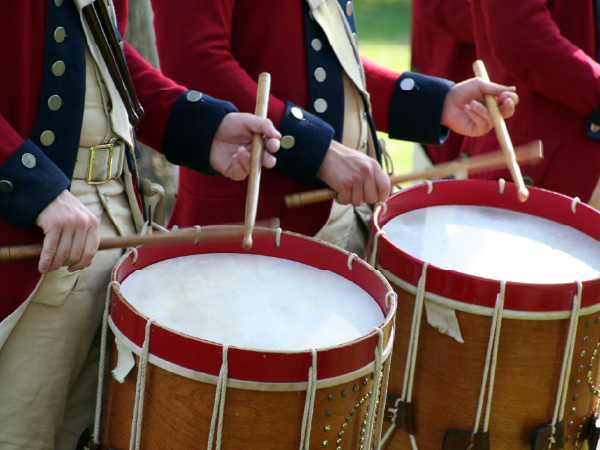
People in historical military uniforms playing large drums with drumsticks.
© Thevillageacademy/Dreamstime.com

In this lesson mini, students explore the history of early American colonies, including Jamestown and the 13 colonies, and learn how British rule influenced colonial life. Through articles, discussions, timelines, videos, graphic organizers, and collaborative projects, students investigate how some colonists sought greater independence from Britain and how Independence Day became an important national holiday. Students also examine important features, symbols, geography, people, plants and animals, and the economy of the United States while developing historical inquiry, reading comprehension, and collaborative learning skills.

Ideas for Implementation
Social studies
Literacy
Library media
Learning centers
Intervention or enrichment
Key Vocabulary & Definitions
colony (noun): an area controlled by one country but located somewhere else
declaration (noun): an important announcement or statement that is made official
independence (noun): the quality or state of being independent; freedom from outside control or support
Indigenous people (noun): people who originally lived in a place
monarchy (noun): a form of government that is led by a single person that inherits the title, such as a king or queen
parade (noun): a public procession, usually festive, where people, bands, and vehicles (floats) move down a street to celebrate a special day or event
patriot (noun): a person who fought for American independence from British rule during the American Revolution
Authentic Learning Extensions
Authentic learning opportunities for studying how American colonists broke from Britain involve real-world experiences and practical applications that help students understand historical concepts meaningfully. Here are some examples:
Documentary Viewings: Invite students to watch documentaries and/or short video clips of the historical events covered in the lesson mini. This will help students develop a deeper understanding of the material discussed.
Fourth of July Cookbook: Have students create a class cookbook featuring Fourth of July recipes inspired by United States Independence Day traditions. Invite each student to write a recipe and, if possible, prepare the dish at home with the support of a family member. Compile the recipes into a class cookbook, and consider hosting a class sharing party where students can present or sample their dishes.
Independence Day Arts and Crafts: Host an arts and crafts workshop inspired by the Fourth of July, and invite students to create themed artwork connected to the United States. Consider having students make American flags, decorate hats or T-shirts, design patriotic posters, or create fireworks-inspired artwork. Encourage students to incorporate national symbols into their creations.
Museum Visit: Visit a history museum that showcases life during colonial times and explains the history of the American Revolution. Consider going to a local museum or taking a virtual tour of another museum. This supports students’ learning as it gives them an opportunity to make text-to-world connections.

Choose Activity

5
From Colonies to Independence

Activity

1 :

Jamestown and the People of Early Virginia

By the end of the activity, students will be able to describe important events and people connected to Jamestown, explain how people lived and worked in the colony, and ask questions about life in early Virginia using information from historical sources.

>40

Minutes

Materials

Whiteboard and display
Writing utensils

Resources

1
Tell students that during today’s activity they will investigate the history of Jamestown and explore what life may have been like for the different people who lived there. Explain that historians learn about the past by asking questions, studying sources, and comparing different perspectives.
2
Display an image of the Jamestown Colony, and read aloud the picture caption: “The first colonists built Jamestown on a marshy piece of land on the James River in what is now the state of Virginia.” Invite students to closely observe the image before beginning discussion. Ask students:
What do you notice in the image?
What questions do you have about this place?
What challenges might people have faced living here long ago?
Why might people choose to travel far from their homeland?
How do you think people traveled to Jamestown in the early 1600s?
3
Record student observations and questions on the board to support inquiry and discussion throughout the lesson. Introduce and define the following vocabulary words together using student-friendly explanations and visuals when possible: colonist, enslaved, marshy, settler, tobacco, servant. Invite students to use the words in sentences or connect them to ideas they already know.
4
Display and give each student a copy of the Jamestown article. Invite students to read the article with a partner and identify important details about the people, geography, and events connected to Jamestown. Model how to identify a main idea and supporting details using the introduction paragraph. Encourage students to highlight information that helps answer the questions generated earlier in the lesson.
5
Give each student a Jamestown Article Questions handout, and invite them to answer the questions as they read the article. Encourage students to use evidence from the article to support their responses. Afterward, bring the class together and discuss how different students identified important information from the text.
6
Display the Slavery in Jamestown video, and then guide students in discussing how historians learn about the experiences of people in the colonies, including enslaved Africans. Encourage students to think about fairness, rights, and daily life in historical communities in age-appropriate ways. Ask students:
What does it mean to be enslaved?
What information did you learn about the experiences of enslaved Africans in Jamestown?
How did the labor of different groups of people help the colony survive and grow?
Why is it important to learn about many different people and experiences when studying history?
7
Give each student a copy of the Storyboard graphic organizer. Invite students to write about the history of Jamestown and identify six key events mentioned in the article and then draw and write about them. Encourage students to include events connected to different groups of people who lived in or influenced Jamestown. After students finish, invite them to share their work with a nearby peer and discuss similarities and differences in the events they selected.
8
Bring the class back together, and call on volunteers to share the events that shaped the history of Jamestown. Encourage students to explain why they believe each event was important in the colony’s history.
9
Display images of present-day Jamestown from a royalty-free resource, and invite students to share what they notice. Ask, “How does present-day Jamestown compare to the Jamestown of the 1600s?” Invite students to consider how communities change over time and how people preserve important historical sites.
10
Wrap up the activity by reviewing that Jamestown was one of the first English colonies in America. Discuss how learning about Jamestown helps historians understand the beginnings of colonial America and the experiences of the people who lived there. Ask students, “Why is it important to study the lives and experiences of many different people when learning about history?”
Language Support: Use visual aids to pre-teach key vocabulary words (e.g., colonist, enslaved, marshy, settler, tobacco, servant). Offer students a simplified language version of the article or the option of reading it in their home language before class. Also, pair students strategically for the partner reading and handout task.
Adapted Storyboard: Provide an adapted version of the storyboard with a list of key events students can choose from during the article synthesis task. Include sentence starters to help students begin writing and stay focused on the main ideas.
Historical Perspectives Journal: Invite students to write a short journal entry from the perspective of a person living in Jamestown, such as a colonist, Powhatan community member, artisan, or servant. Encourage students to use evidence from the article to describe daily life, work, and challenges while avoiding fictional details not supported by the sources.
News Report: Instead of creating a storyboard, invite students to write a news report about one important event mentioned in the article and present it as a breaking news story. Encourage students to include a headline, the five Ws (who, what, when, where, and why), and how the event impacted Jamestown.
Team Teaching: For collaborative teaching and learning environments, this learning activity is well suited to a Team Teaching strategy. In this model, sometimes referred to as “tag team teaching,” both teachers deliver instruction together, often alternating or integrating their teaching styles seamlessly. This collaborative approach provides students with multiple perspectives and teaching styles, enriching their learning experience. By modeling effective teamwork and communication, this approach demonstrates how different viewpoints can enhance understanding and create a dynamic and interactive classroom environment. Evidence indicates that team teaching can enhance student engagement and provide a richer, more diverse educational experience.
Activity Introduction: Teacher A introduces students to the learning objective. Teacher B displays images of Jamestown and invites students to describe what they notice and defines key vocabulary words on the board.
Article Reading and Summary: Teacher A instructs students to work in pairs and distributes the Jamestown article and the Jamestown Article Questions handout to each student. Both teachers circulate and support students as they complete the partner reading task and article comprehension handout. Teachers encourage students to use evidence from the text when sharing ideas and answering questions.
Video Viewing: Teacher A displays the Slavery in Jamestown video and then facilitates a discussion about slavery in colonial America. Teacher B circulates the room to ensure student engagement. Both teachers support respectful discussion and encourage students to ask questions about the historical experiences presented in the video.
Storyboard: Teacher A gives each student a copy of the Storyboard Graphic Organizer and invites students to write about the history of Jamestown by identifying six key events mentioned in the article and then drawing and writing about them. After students finish, Teacher B has them share their work with a nearby peer. Both teachers bring the class back together and call on volunteers to share the events that shaped the history of Jamestown.
Activity Wrap-Up: Teacher A finishes by showing present-day images of Jamestown and inviting students to describe what they notice. Teacher B closes by asking reflection questions that encourage students to connect historical learning to the importance of understanding different experiences and perspectives in history.
From Colonies to Independence

Activity

2:

Exploring the 13 American Colonies

By the end of the activity, students will be able to identify important facts about the 13 American colonies, describe how the colonies were established, and explain how the colonies contributed to the early development of the United States.

>40

Minutes

1
Tell students that during today’s activity they will learn about the history of the 13 American colonies, how they were settled, and how the colonies contributed to the early development of the United States of America.
2
Begin by asking students, “What do you know about the original American colonies? Where in the present-day United States do you think the colonies were located?”
3
Display the Timeline of the 13 American Colonies interactive, and point to the map of the original 13 colonies. Ask students:
What do you know about these places?
What do you notice about where they are located?
4
Display and give each student a copy of the 13 Colonies article. Explain that the article discusses how each colony was established, the interactions between colonists and Indigenous people, and the relationship between the colonies and Indigenous people and between the colonies and Britain. Define the following words on the board:
Indigenous people: people who originally lived in a place
colony: a place that is controlled by a country that is far away
colonist: a person who lives in or helps to create a colony
5
Divide the class into pairs, and have them read the article together. Have students take notes on the “Establishment of the Colonies” section using a Timeline graphic organizer. As students finish, bring the class back together and review students’ responses with the whole group.
6
Have student pairs continue reading the remaining sections together and highlight important ideas. Before students continue working with their partners, model how to highlight or circle key ideas.
7
After students finish reading, give each student a copy of the 13 Colonies Article Questions handout, and have them answer the questions with a partner. Afterward, review students’ responses with the whole group.
8
Review important ideas from the article by distributing one digital device per student and guiding them to access and read the Timeline of the 13 American Colonies interactive.
9
Ask a series of trivia questions about the article and interactive, asking students to raise their hand if they know the answer. Consider asking, for example:
What was the first colonial settlement called? (Jamestown)
Where did the Pilgrims first arrive, and why did they want to leave Britain? (Massachusetts, for religious freedom)
What was the new name given to the original colony New Netherland? (New York)
Which colonies were founded later than many of the others? (The Carolinas and Georgia)
10
Wrap up the activity by asking students to share one new fact they learned about the 13 American colonies and their path toward independence from Britain. Close by asking students, “How did the original 13 American colonies help shape the early United States?”
Language Support: For students who benefit from additional language support, pre-teach key vocabulary and use visual aids to enhance understanding. Provide students with a Picture Glossary graphic organizer to support them in incorporating new vocabulary. Place multilingual students with supportive peers who speak their home language for the reading comprehension task. Provide a translated version of the 13 Colonies article along with the English version to enhance understanding of main ideas.
Collaborative Timeline: Support students in completing the Timeline graphic organizer by reading the first section of the article in a small group or whole-class setting and completing the timeline with teacher guidance. This approach helps students successfully identify key ideas and then organize them in chronological order effectively.
Colony Spotlight: Challenge students to choose a colony to research and list reasons why people may have wanted greater self-government or independence from Britain. Encourage students to research articles from Britannica School or another royalty-free resource.
Exit Ticket: Instead of asking students trivia questions, have them write a question that corresponds to the answer “13 Colonies.” For example: “How many colonies did the United States have originally?” or “What do the stripes of the American flag represent?” Provide a Write a Question handout for students to complete this variation.
One Teaching, One Assisting: For collaborative teaching and learning environments, this learning activity is well suited to a One Teaching, One Assisting strategy. In this model, one teacher leads the activity while the other circulates, assisting individual students as needed. This ensures that when students encounter difficulties, they receive immediate help in the form of personalized support and answers to their questions. By addressing students’ unique needs and keeping them on track, this approach enhances individual learning experiences and fosters a supportive classroom environment. Studies indicate that immediate feedback and individualized attention can significantly enhance student understanding and retention of material.
Activity Introduction: The lead teacher introduces the history of the 13 American colonies by facilitating a whole-group discussion about what students know about the 13 colonies and their present-day location. Next, the assisting teacher displays the Timeline of the 13 American Colonies interactive and points to the map of the original 13 colonies. Ask students, “What do you know about these places?” and “What do you notice about where they are located?”
Article Reading: The lead teacher displays and gives each student a copy of the 13 Colonies article, previewing the sections the article covers. The assisting teacher records key words on the board.
Timeline Graphic Organizer and Questions: The lead teacher divides the class into pairs and invites them to read the article together and complete a Timeline graphic organizer and answer the 13 Colonies Article Questions handout. The assisting teacher distributes one graphic organizer and one handout to each student.
Trivia Questions Review: The lead teacher asks a series of trivia questions about the article and interactive and asks students to raise their hand if they know the answers. The assisting teacher circulates the room and offers support as needed.
Lesson Wrap-Up: The lead teacher asks students to share one new fact they learned about the 13 American colonies and how the colonies contributed to the early development of the United States. The assisting teacher circulates around the room to assist individual students and ensure they are engaged.
From Colonies to Independence

Activity

3:

From Monarchy to Independence

By the end of the activity, students will be able to describe what a monarchy is, identify one or two types of monarchies, and explain at least three reasons some American colonists wanted independence from British rule.

>40

Minutes

1
Tell students that during today’s activity they will learn about a form of government called a monarchy.
2
Begin by explaining that, in the 1700s, the American colonies were governed by Great Britain. Share that a monarchy is a form of government led by a king or queen. When the United States declared independence from Britain, King George III was the king of Great Britain. Explain that colonists had different opinions about British rule, and over time, some colonists wanted greater independence and self-government.
3
Display and give each student a copy of the Monarchy article. Share that it explains the history and different types of monarchies. Before students begin reading, invite them to reflect on what it might have been like for colonists to be governed by a king who lived far away.
4
Encourage students to read with a nearby partner and take reading notes of key words, key facts, and main ideas using the Note-Taking graphic organizer. Model an example before students begin working.
5
Afterward, bring the class back together and call on pairs to share their findings. Record student ideas on the board to help summarize the characteristics of monarchy.
6
Divide the class into groups of four or five students and distribute a digital device to each group or student. Provide a list of key events or terms for students to research, such as the Stamp Act, the Boston Tea Party, “Taxation Without Representation,” the Intolerable Acts, the Boston Massacre, and the American Revolution.
7
Distribute one Research Guide to each group, and help students identify what happened during each event, why some colonists were unhappy, who was involved, and what actions colonists took in response. Remind students that historians study events from multiple perspectives and that people at the time held different opinions.
8
Invite students to write a short group letter directed to King George III explaining reasons some colonists wanted greater independence from British rule. Encourage students to use respectful and historically accurate language supported by their research.
9
Call on different groups to read their letter aloud and compare ideas about why some colonists supported independence from Britain.
10
Wrap up the activity by asking students, “Why do you think some colonists wanted independence?” and “What does independence mean?” Encourage students to support their responses using information they learned during the activity.
Language Support: For students who benefit from additional language support, provide vocabulary cards with key words from the Monarchy article supported by visual aids to help students build vocabulary. Give students a glossary and bilingual dictionary to use when reading the Monarchy article. Pair multilingual learners with bilingual peers or native English speakers for the collaborative writing task.
Research Task: Divide the class into groups of four or five students, and assign each group a specific event connected to growing disagreements between some American colonists and the British government in the 1700s. This approach keeps students’ research focused and encourages them to learn from one another as they present their findings to the class.
Today’s Monarchies: Invite students to read and learn about present-day monarchies mentioned in the text. Provide a curated list of articles from Britannica School or another royalty-free resource, and have students write a brief overview explaining the history and role of the monarchy today.
Digital Presentation: Instead of writing a letter to King George III, invite students to summarize their key findings through a digital presentation. Encourage students to reference the article and include visual aids and primary sources to support their ideas.
Parallel Teaching: For collaborative teaching and learning environments, this learning activity is well suited to a Parallel Teaching strategy. In this model, the class is divided into two groups, and each teacher delivers the same activity simultaneously to their group. This reduces the student-teacher ratio, allowing for more interaction and individualized attention. With smaller groups, students are more likely to participate actively and receive immediate feedback, which fosters a deeper understanding of the content and promotes a more engaging learning experience. Evidence suggests that small-group instruction leads to increased student engagement and improved academic outcomes.
From Colonies to Independence

Activity

4:

The History of Independence Day

By the end of the activity, students will be able to identify important events connected to the history of Independence Day and describe ways people celebrate the Fourth of July in the United States.

<40

Minutes

1
Tell students that during today’s activity they will learn about the history of July 4 and how it is celebrated in the United States.
2
Begin by displaying an image of fireworks on Independence Day in Washington, D.C., and an image of a person dressed as Uncle Sam. Invite students to describe what they notice, and then ask:
How do people celebrate July 4 in your community?
What are some activities people may do during Fourth of July celebrations?
Have you ever heard of Uncle Sam? What do you think he represents?
Why do you think fireworks and live music are often used in celebrations?
3
Display and distribute the Independence Day article to each student. Invite them to skim the article and circle key words related to the Fourth of July. Then have them compare and discuss their words with a peer sitting nearby.
4
Invite students to continue working with their partner to read the article together and give each student a Timeline graphic organizer. Instruct them to identify and record three to five key events explained in the article, particularly in the “History” section.
5
Bring the class back together and review the answers as a class by drawing and completing a large timeline on the board. Consider facilitating a discussion about the article and asking:
When did the Continental Congress adopt the Declaration of Independence?
Who was in charge of the 13 American colonies in the 1700s?
What role did President Thomas Jefferson play in the Declaration of Independence?
How was the first Independence Day celebrated? How is it celebrated today?
6
Tell students that they will work with the same partner to choose and draw a visual representation of one event listed in their timelines. Have them include the name and date of the chosen event.
7
Distribute a poster board and coloring utensils to each pair and allot time for them to work. As students complete the task, circulate the room and offer support as needed.
8
As students finish, invite them to share their work with the class and place the poster boards in chronological order.
9
Wrap up the lesson by asking students to think about how Independence Day was celebrated in the past versus the present. Ask, “What do you think has changed about Fourth of July celebrations over time, and what has stayed the same?” Encourage students to support their responses using information from the article and class discussion.
Language Support: Pre-teach key vocabulary words from the article (e.g., independence, colonists, Declaration of Independence, tax), and offer students the option of reading the Independence Day article both in English and in their home languages. Provide article questions ahead of time, as well as a list of sentence frames to help students participate in class discussions.
Visual Timeline: Encourage students to complete a Visual Timeline graphic organizer to identify and record the key events explained in the article. These visual depictions help students organize important ideas and internalize new learning.
Fourth of July Party: Have students plan and write an invitation to a Fourth of July party. Encourage students to think about the food, decorations, games, and activities they would include in the celebration. Then have them create a sample invitation to share with the class. This activity helps students develop their creative thinking and writing skills.
Patriotic Symbols: Instead of having students work on a timeline to identify important events that led to Independence Day, invite students to focus on Fourth of July words and draw visual representations of different patriotic symbols such as flag, parade, victory, or Declaration of Independence. This approach focuses on vocabulary building.
Parallel Teaching: For collaborative teaching and learning environments, this learning activity is well suited to a Parallel Teaching strategy. In this model, the class is divided into two groups, and each teacher delivers the same activity simultaneously to their group. This reduces the student-teacher ratio, allowing for more interaction and individualized attention. With smaller groups, students are more likely to participate actively and receive immediate feedback, which fosters a deeper understanding of the content and promotes a more engaging learning experience. Evidence suggests that small-group instruction leads to increased student engagement and improved academic outcomes.
From Colonies to Independence

Activity

5:

The United States: People and Places

By the end of the activity, students will be able to identify and describe important features of the United States, including its geography, plants and animals, people, and economy.

>40

Minutes

1
Tell students that during today’s activity they will learn about the geography, plants, animals, people, and economy of the United States.
2
On the board, provide definitions of the words geography, fauna, flora, and economy to enhance students’ understanding of the article. Consider including visuals or examples to support understanding of each term.
3
Begin by distributing a Minute List handout and asking students to list everything they know about the United States in the first column. Then, have students pair-share their lists and add new ideas they learned from their partner. Finally, create a class list by having each pair share a new idea.
4
Display the United States Symbols image, and share that each image is a major national symbol. Challenge students to look at each one and share what they know about each. Remind students that national symbols can represent important ideas, history, or traditions connected to a country.
5
Display and give each student a copy of the United States article. Explain that the article provides quick facts about the United States and discusses its geography, plants, animals, people, and economy.
6
Invite students to read the article with a partner, and distribute one Column Notes graphic organizer to each student. Challenge them to identify the main ideas, details, and quotes from the article. Model an example before students begin working in pairs.
7
Afterward, bring the class back together and review students’ findings. Record their ideas on the board.
8
Distribute a digital device to each student, and invite them to synthesize their main learnings about the United States by completing a creative project to showcase their knowledge. Students may choose to write a travel brochure, create a presentation, or create digital collage. As students work, circulate the room and offer support as needed. Students must
Use evidence and quotes from the article
Include a creative project title
Integrate at least three facts about the United States’ geography, fauna, flora, people, and economy in their work
Use visuals and creative elements in their projects
Ensure the projects are cohesive and organized
Consider having students present their work during the next class period.
9
Wrap up the activity by asking students to share one new fact that surprised them about the United States. Then challenge them to think about how life in the United States has changed over time and how communities may continue to change in the future. Encourage students to support their ideas using information from the article and class discussion.
Language Support: Pre-teach key vocabulary words from the article and offer students the option of reading the United States article both in English and in their home languages. Provide an adapted Column Notes graphic organizer with a word bank and sentence starters.
Focused Project: Instead of allowing students to choose between a digital presentation, travel brochure, or digital collage, provide one project option for the entire class, and scaffold instruction by showcasing finished work samples, guided questions, and sentence starters. This approach can help students focus more deeply on content while providing additional structure and support.
Music Videos: Challenge students to create a music video to synthesize the ideas highlighted in the article. Encourage students to use evidence and quotes from the article, come up with a music video title, and integrate at least three facts about the United States’ geography, fauna, flora, people, or economy in their work.
National Symbols Research: Instead of having students focus on synthesizing the key ideas from the text, have them choose a national symbol to research and then present. Divide students into pairs, and assign the different symbols shown in the United States Symbols image evenly among groups. Encourage students to explain the meaning, history, and importance of their assigned symbol using evidence-based claims.
One Teaching, One Observing: For collaborative teaching and learning environments, this learning activity is well suited to a One Teaching, One Observing strategy. In this model, one teacher provides direct instruction to the entire class while the other observes student behavior and engagement to gather evidence of learning. This approach allows for detailed observation and assessment, helping identify students who need additional support or intervention. By focusing on student responses and participation, the observing teacher can ensure that the learning needs of all students are addressed and met in the activity. Research shows that targeted observation can lead to more effective intervention strategies, improving student performance.
Activity Introduction: The lead teacher tells students that during today’s activity they will learn about the geography, plants, animals, people, and economy of the United States. Then define key words on the board, and invite students to use them in a sentence. The observing teacher notes student engagement.
Bell Ringer and Image Analysis: The lead teacher distributes a Minute List handout and asks students to list everything they know about the United States and then pair-share their lists, adding new ideas they learned from the partner. Finally, the lead teacher creates a class list by having each pair share a new idea. The observing teacher focuses on student responses and participation. After, the lead teacher displays an image of United States symbols and facilitates a whole-class discussion as the observing teacher notes student responses.
Article Reading and Graphic Organizer: The lead teacher gives each student a copy of the United States article and previews what the article will be about. Then the lead teacher invites students to read the article with a partner and encourages them to complete a Column Notes graphic organizer. Afterward, they bring the class back together and review students’ findings. The observing teacher focuses on how students interact in pairs and during the whole-group discussion.
Creative Project: The lead teacher distributes a personal digital device to each student and invites them to synthesize their main learnings about the United States by completing a creative project to showcase their knowledge. Students may choose to write a travel brochure, create a presentation, or digital collage. As students work, the lead teacher circulates the room and offers support as needed while the observing teacher notes student engagement.
Activity Wrap-Up: The lead teacher asks students to share one new fact that surprised them about the United States and then challenges them to think about what life was like in the United States in the past, how it is in the present, and what it will look like in the future. The observing teacher provides targeted observations.
© Encyclopædia Britannica, Inc. All rights reserved.
